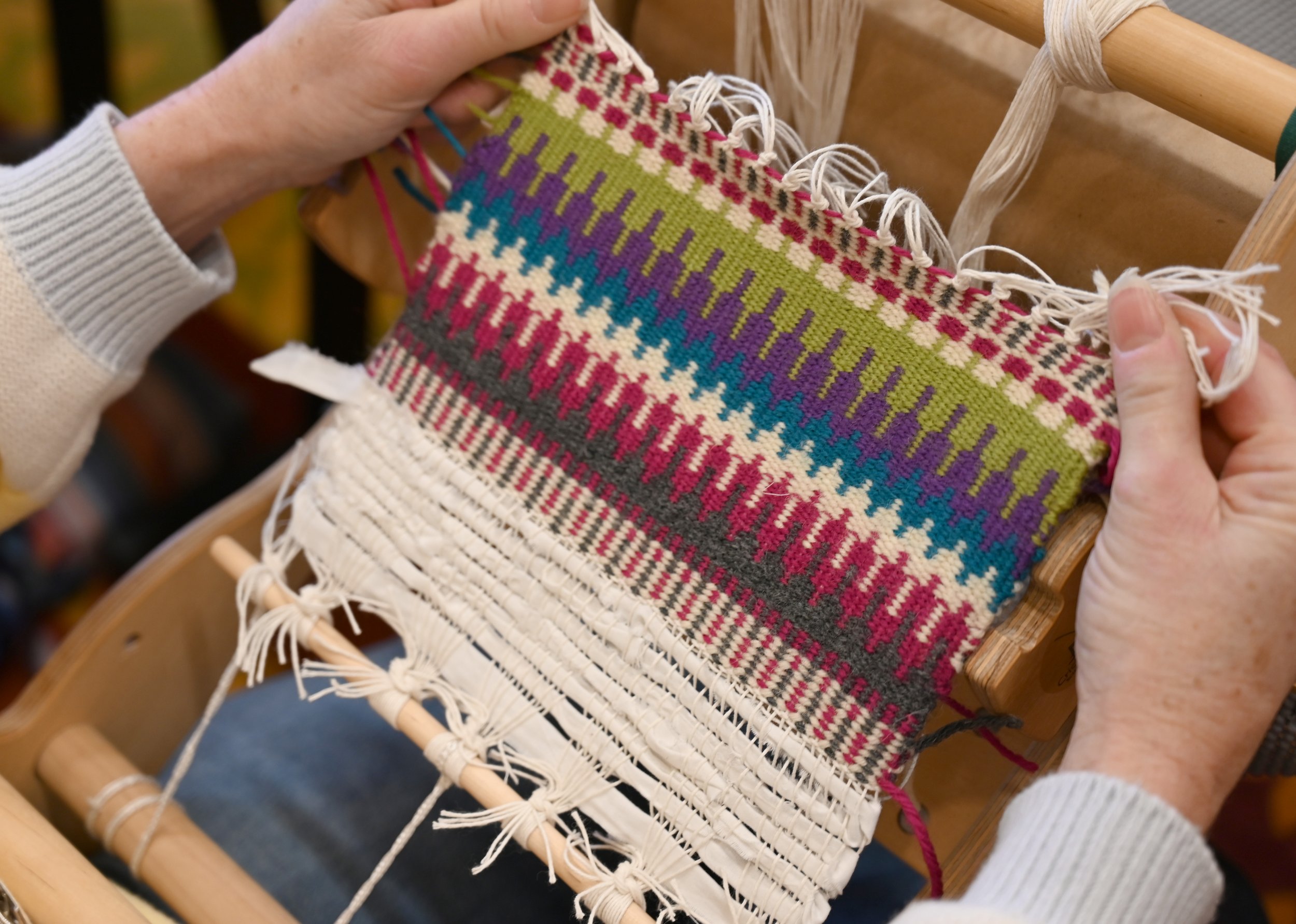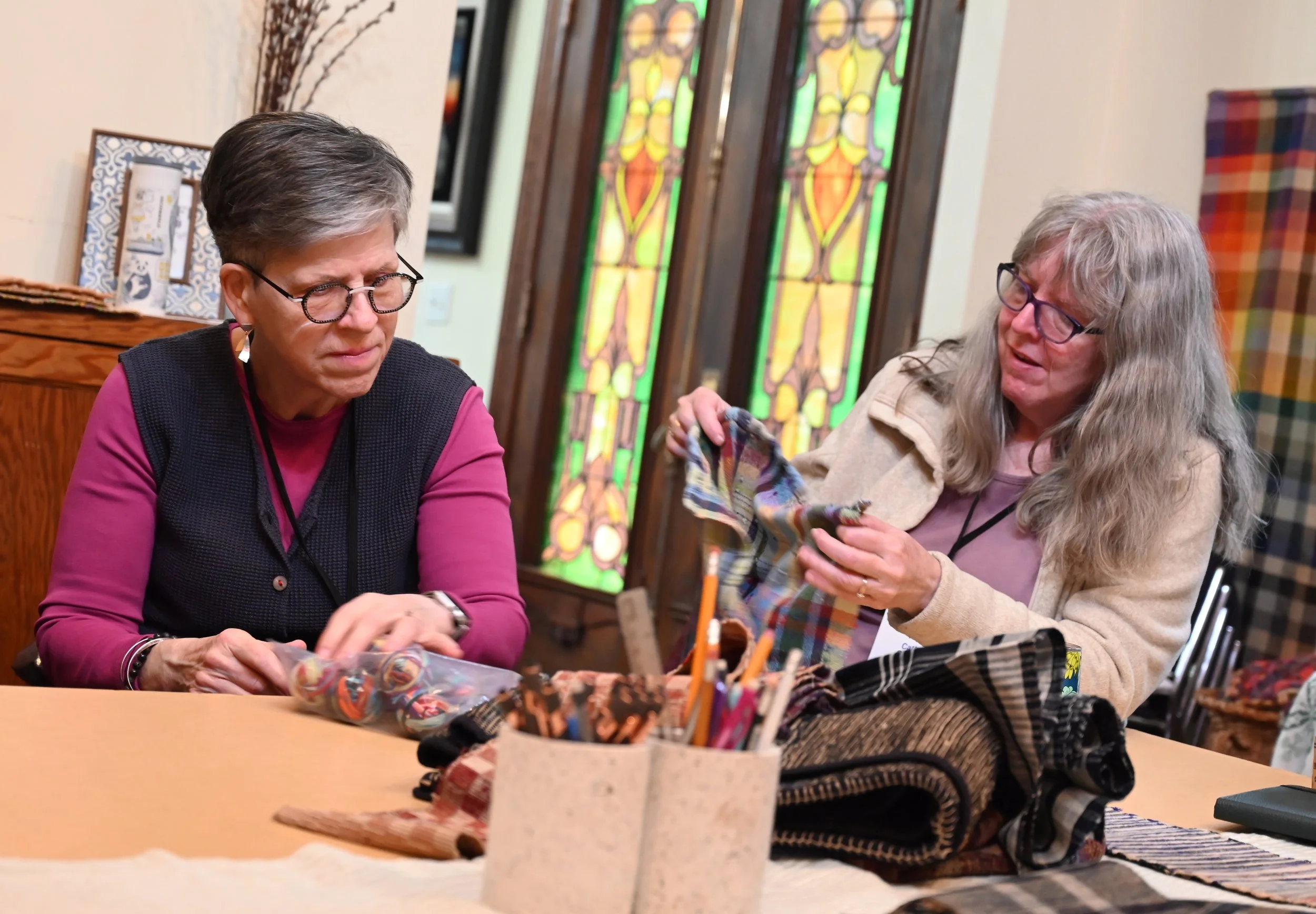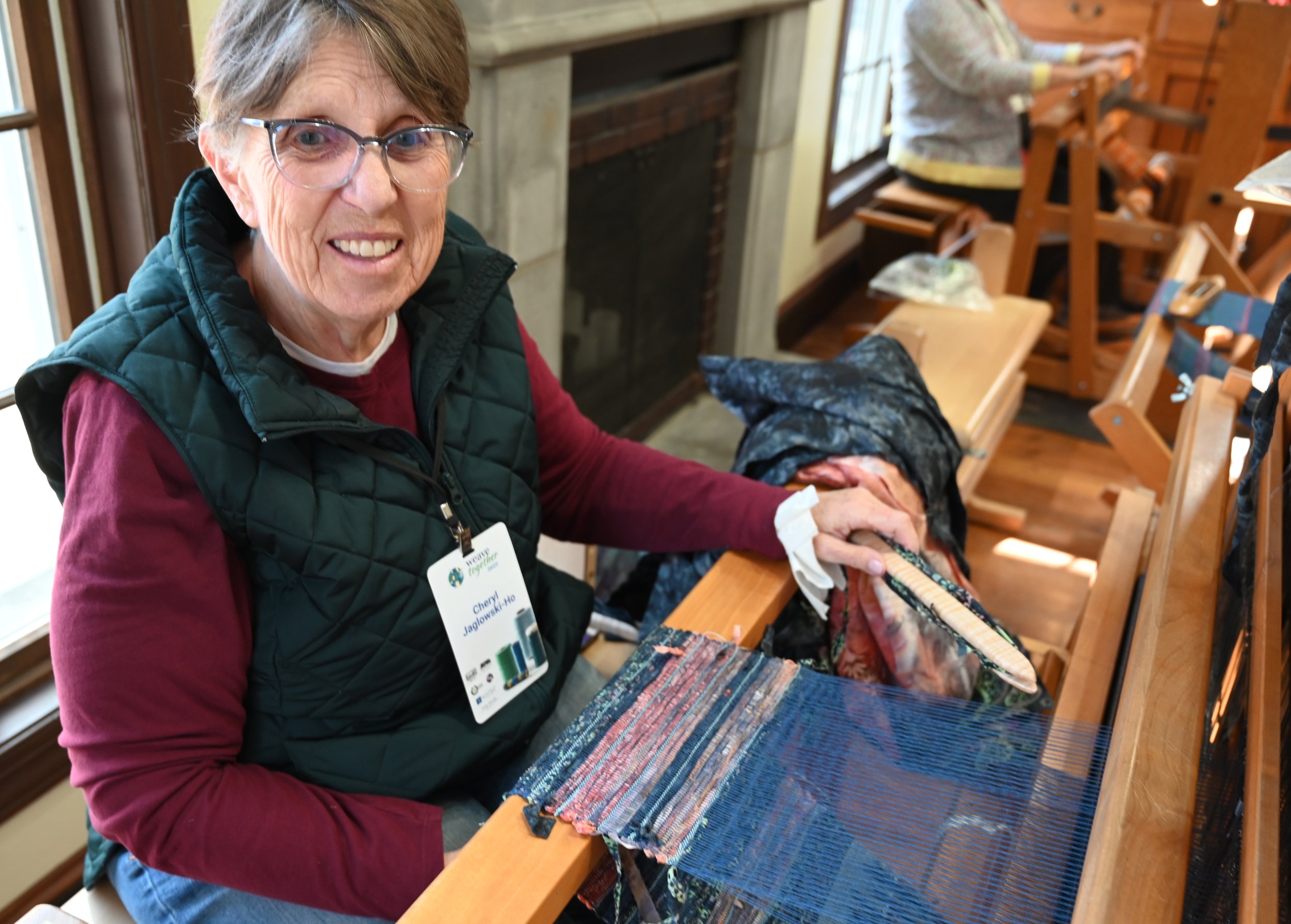
Join Us at the Ultimate Weaving Retreat!
Whether you’re a multi-shaft weaver or small looms are more your style, this special event is just for you. From March 21-25, 2027, join us in York, Pennsylvania, for four days of weaving, community, and fun. You’ll find much to love in our broad range of courses, all led by top-notch teachers.
Don’t miss this worry-free weaving getaway! All accommodations, breakfasts, lunches, dinners, classes, marketplace access, and evening events are included, but space is limited.
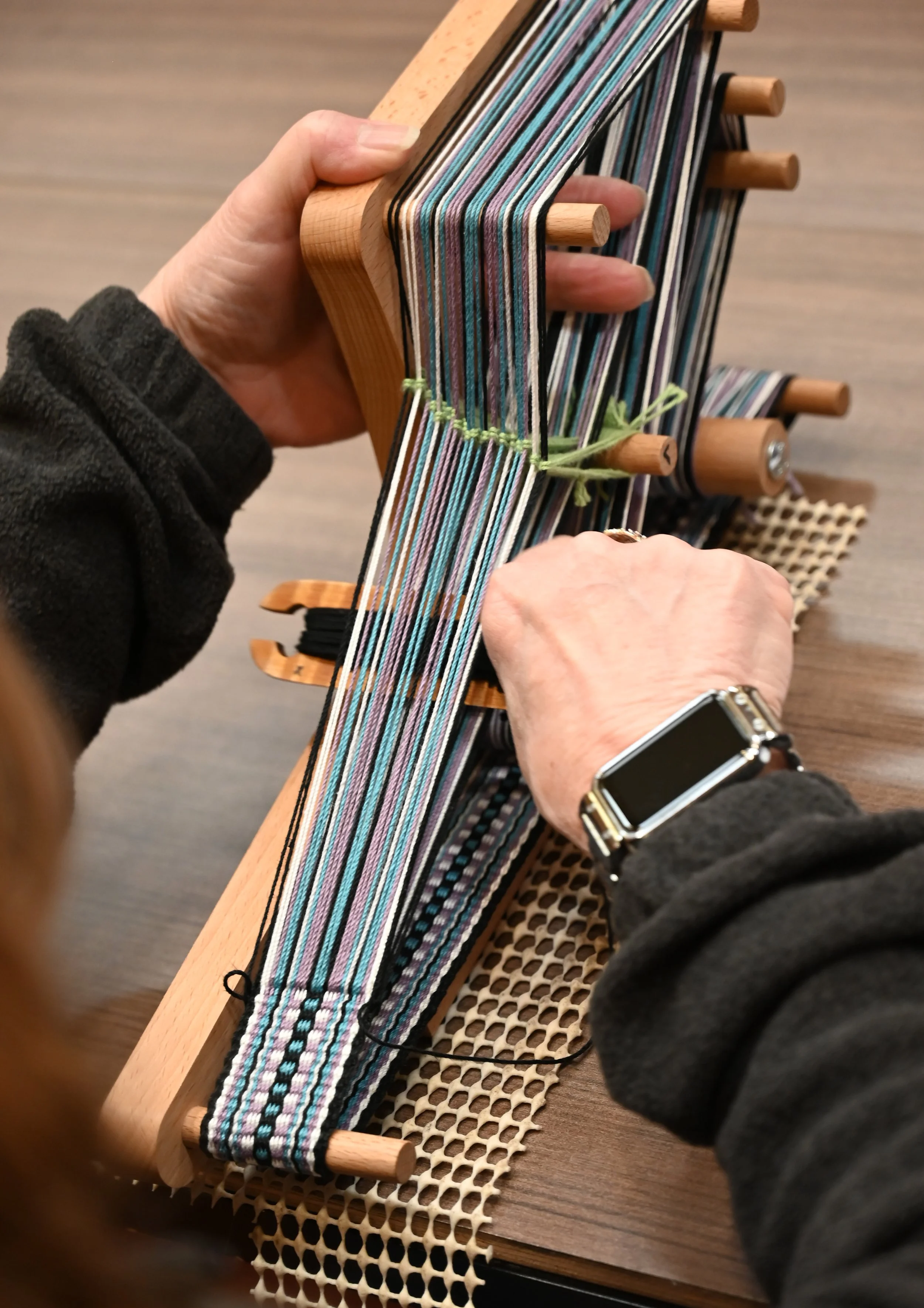
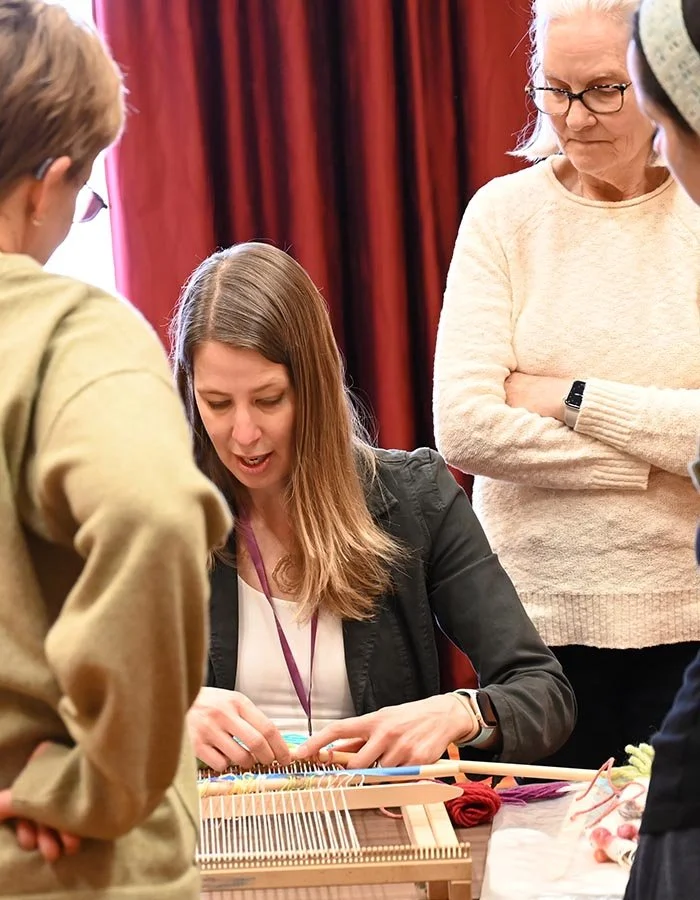
Here’s Why Weavers Love this Retreat!
-
”I am very excited about what I learned and am already planning projects for 4–5 of the techniques I tried. It was great! ”
Robin I.
-
“It was everything I had wished and hoped for. A congenial group of people sharing the same interests. The stress of the world just melted away.”
Joan W.
-
”Thank you for a fabulous weaving experience. I did not know what to expect and was simply blown away. My classes were so thorough and well-organized. The company of the other weavers was inspiring. See you next year!“
Vanessa S.
2027 Classes
Monday Classes - 2027 Event
Note: Some classes below are 3-day or 2-day classes. Please check the class type and description for more details. Have additional questions about the classes? Are you curious which ones are beginner-friendly? Contact us at [email protected].
Expand Your Rug Weaving Repertoire
Instructor: Tom Knisely
Type: 2-day | Multi-shaft class | Day 1 (looms provided)
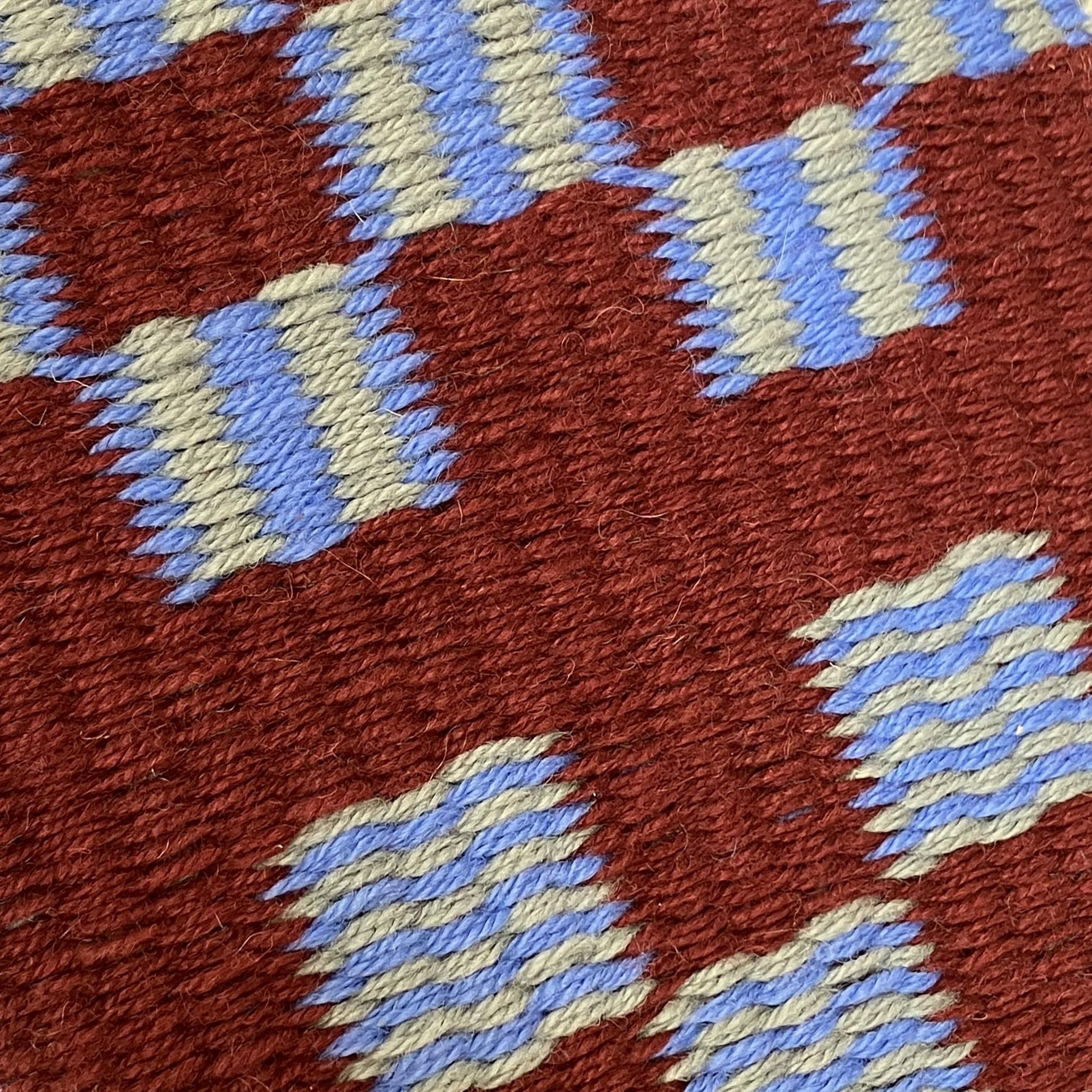
Weave a strong, durable weft-faced two-block design that lets you create solid blocks, blocks with horizontal stripes, and blocks with vertical stripes—all in the same rug. Tom, who has been weaving and teaching rugs for decades, will teach you about the proper warp and weft materials to use, as well as how to determine sett. You’ll weave a sample mat on a pre-warped loom, and then learn several ways to finish your piece. You’ll leave with everything you need to weave your own two-block rug with confidence.
See Location Notes for information about where this class will be held.
Class is currently at capacity. Waitlist requests can be made during class selection.
-
Multi-shaft (looms provided)
-
Notebook
Graph paper
Pen
Colored pencils
Typical weaving tools, including scissors, tapestry needles, tape measure, and t-pins
-
None
-
Tom will provide a pre-warped loom for each student, along with shuttles and all required yarn.
-
Must have a working knowledge of weaving drafts and confidence weaving on a multi-shaft loom.
-
This class will be held offsite at the Red Stone Glen Fiber Arts Center and requires navigating a few steps to access the classrooms. If you have questions about this class, please contact us.
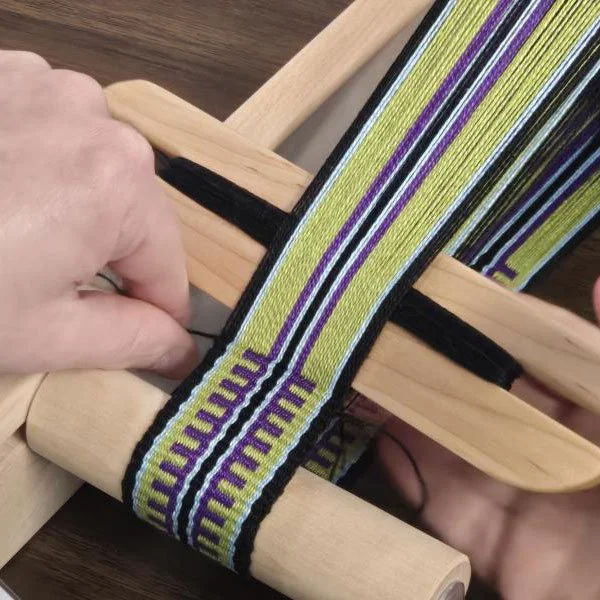
Inkle Basics and Skill Builder
Instructor: Sara C. Bixler
Type: 1-day | Inkle class
No previous weaving experience required.
Learn a skill that stretches back millennia—how to weave narrow warp-faced bands. Our ancient ancestors wove them on simple looms for use as straps, belts, trims, and handles. We can weave those same bands on inkle looms, and use the results for modern straps, belts, trims, and so forth. You’ll learn the entire process from planning a simple band, choosing appropriate materials, and winding the warp, to weaving and finishing your first inkle band!
-
Inkle
-
EQUIPMENT AND TOOLS
Inkle loom (Must have a tensioning option)
50 heddles
1 belt shuttle
Scissors
Tapestry needle
Notebook and pen/pencil
YARN
Instructor will provide all yarn.
-
Scissors
Tape measure
-
Yarn will be supplied. If you have questions about whether the loom you plan to bring will work, please get in touch with us at [email protected] and we’ll connect you with Sara.
-
None
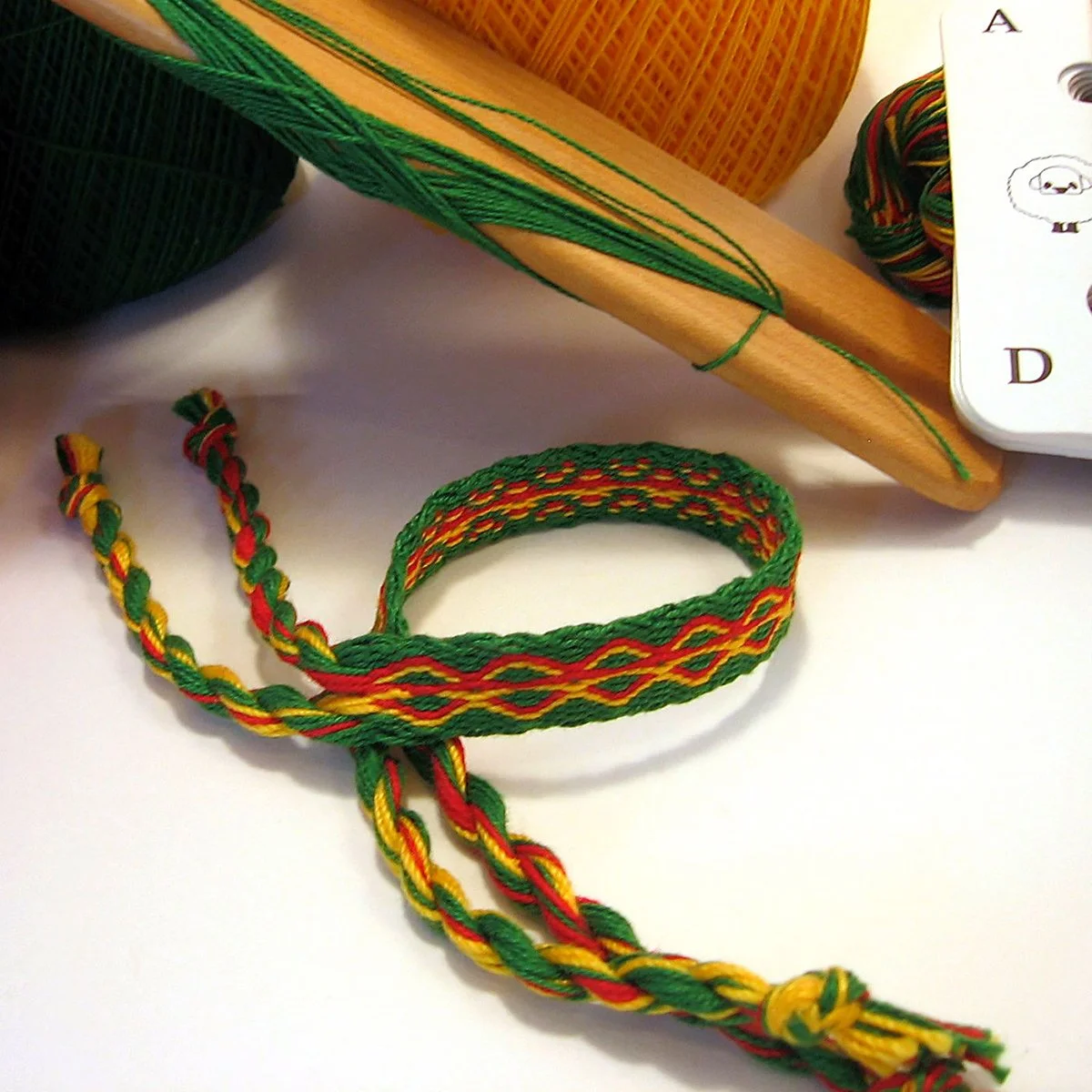
Tablet Weaving 101: Make a Bracelet or Lanyard
Instructor: John Mullarkey
Type: 1-day | Tablet-weaving class
No previous weaving experience required.
With just a handful of cards, turn plain yarn into a band you’ll be proud to wear. Begin by learning to read tablet-weaving drafts, then set up the cards on your loom with a continuous warp. During class, you’ll weave a band and learn about finishing techniques. Along the way, you’ll learn how to avoid common pitfalls, get John’s tips and tricks for weaving perfect bands, and discover which findings create the perfect finish for your work.
-
Inkle
-
EQUIPMENT AND TOOLS
Inkle loom, full-size (Note: Ashford Inklette is too small)
Twenty 4-hole cards
Belt shuttle
Scissors
YARN
10/2 mercerized or unmercerized cotton or #10 crochet thread in two highly contrasting colors. Before class, prepare two ½-oz balls of one color, and two ½-oz balls of the contrasting color. Note: There will not be time in class to wind off, so please come prepared with four yarn sources.
-
None
-
Bracelet/lanyard findings will be provided for you.
-
None. This class welcomes brand-new tablet weavers and it’s also an excellent refresher for any tablet weaver.
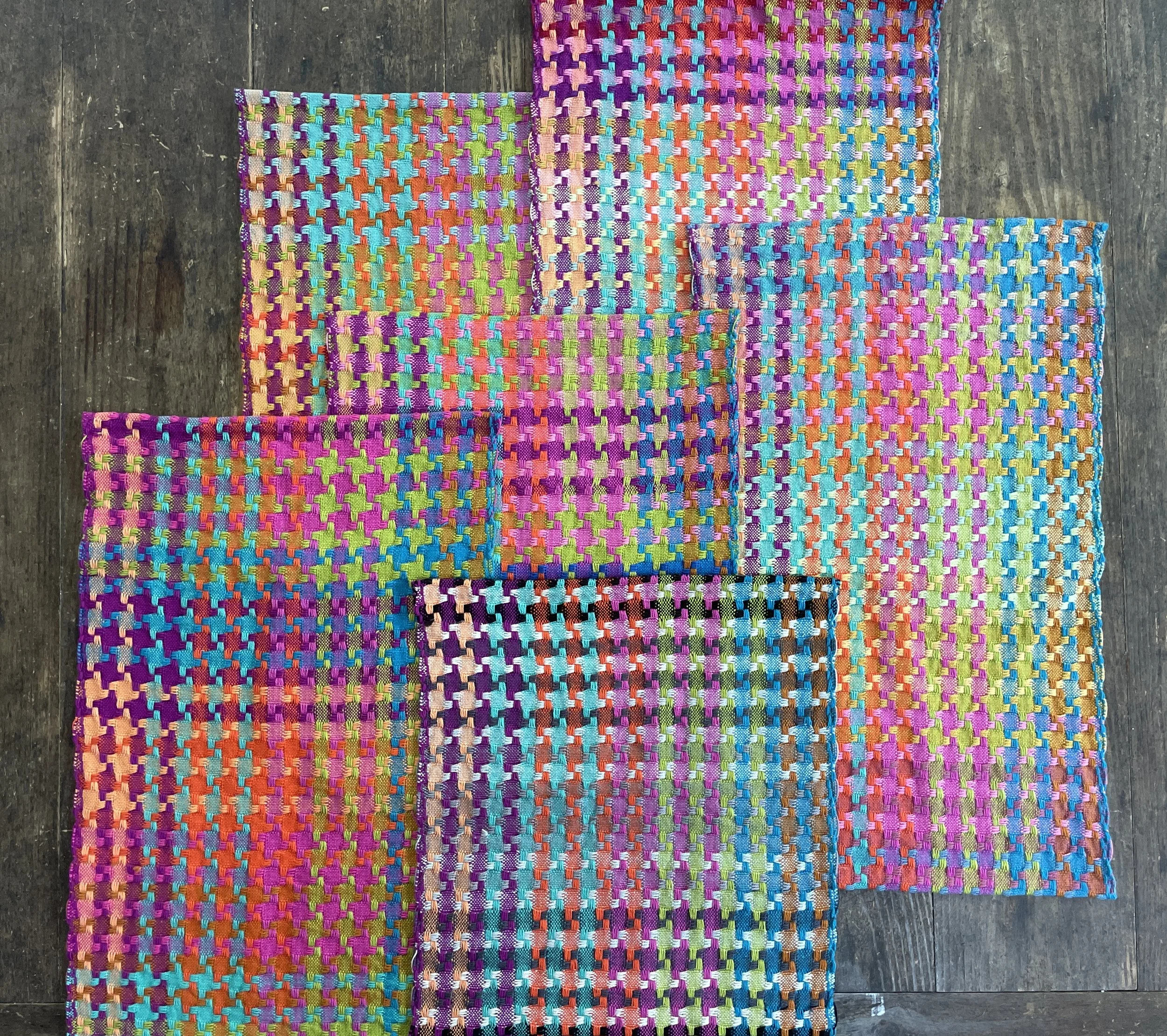
Welcome to the Color Playground—No Theory Required!
Instructor: Véronique Perrot
Type: 3-day | Multi-shaft class | Day 1
Develop your own sense of color in this practical, playground-style workshop! Using yarns provided in class, you’ll design a warp as a color playground, dress your loom, and weave several color studies to explore how different weft colors transform the project. You’ll also learn how to work with a mixed warp—a warp wound holding two different colors in hand—and how to rearrange the ends in stripes when dressing the loom. You’ll leave the class with samples showing your playground with all sorts of color interactions, plus a towel or napkin woven using your preferred weft options.
-
Multi-shaft
-
EQUIPMENT AND TOOLS
2-, 4- or 8-shaft table or floor loom, 14" or larger weaving width
One of the following reed/heddle combinations:
10-dent reed with 170 heddles on each of 2 shafts on a table loom
10-dent reed with 85 heddles on each of 4 shafts on a floor loom
12-dent reed with 45 heddles on each of 8 shafts, preferably on a floor loom
2 boat shuttles (NOT end-feed shuttles); instructor will provide bobbins
Equipment needed to dress your loom (smooth cord, lease sticks, reed holders, threading and sleying hooks, warp separators)
Weights for floating selvedges
Typical weaving tools, including scissors, tapestry needles, tape measure, and t-pins
Notebook and pen/pencil
Thick waste yarn
-
8/2 cotton/cottolin in the student’s preferred colors (see Notes from Instructor)
Warping board or reel
-
About 50 colors of 8/2 cotton will be provided for you to choose from and use during class, but you are welcome to bring your own yarn.
Several warping boards and bobbin winders will be available for student use.
-
Students must be able to warp their own multi-shaft loom and follow a simple draft.
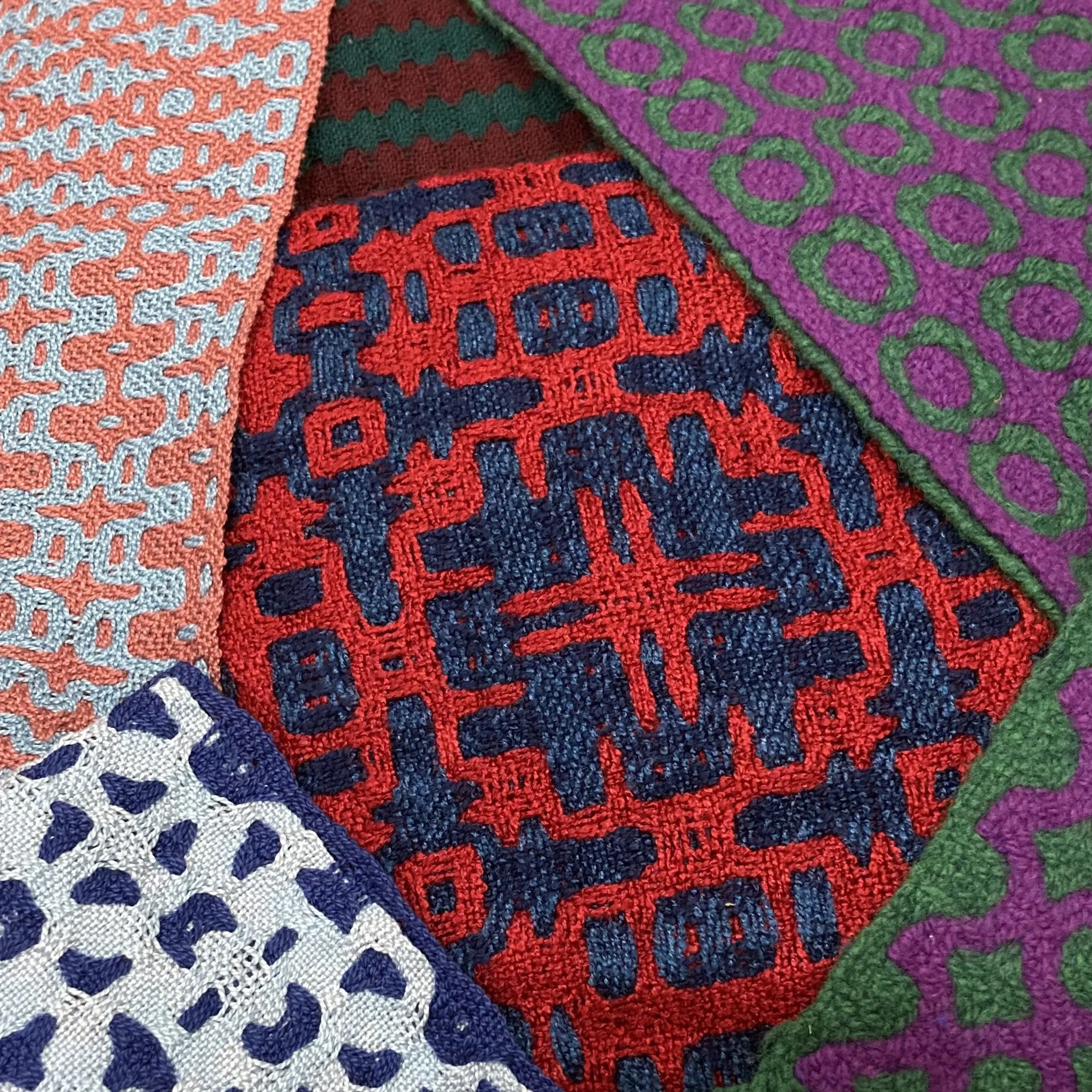
Dive Into Deflected Doubleweave
Instructor: Angela K. Schneider
Type: 2-day | Multi-shaft class | Day 1
Learn to weave grids that bend into surprisingly organic shapes, then improvise your treadling to make new designs on the fly. This class explores the mechanics and design possibilities of a complex-looking weave structure, breaking it down into simple, understandable components. Angela’s innovative approach to the structure—she has developed an original skeleton tie-up method—opens up new possibilities for weaving and design. Working at your own loom, you’ll weave a sampler of your own treadling designs. After wet-finishing it, you’ll discover firsthand how straight grids give way to soft curves.
-
Multi-shaft
-
EQUIPMENT/TOOLS
Eight-shaft floor or table loom with a 10" minimum weaving width, pre-warped (four-shaft looms are allowed, but weavable patterns are limited)
10-dent reed (see Yarn, below)
2–3 shuttles and bobbins
Pick-up stick
Typical weaving tools, including scissors, tapestry needles, tape measure, t-pins
Notebook, pencil or pen
YARN
Warp and weft: 5/2 pearl cotton, 2–5 colors depending on draft (see Notes from Instructor below). 8/2 cotton, cottolin, or Tencel are allowed but require a 12-dent reed.
-
Extra shuttles and bobbins
Additional weft yarns for color explorations
Tags for marking samples
Camera or cell phone
Reading glasses, if you use them for close work
-
You will choose a draft from several suggested options and warp your loom before class based on the instructions provided.
Instructor will provide handouts for this class.
-
Students must be able to read a draft and warp a multi-shaft loom prior to class.
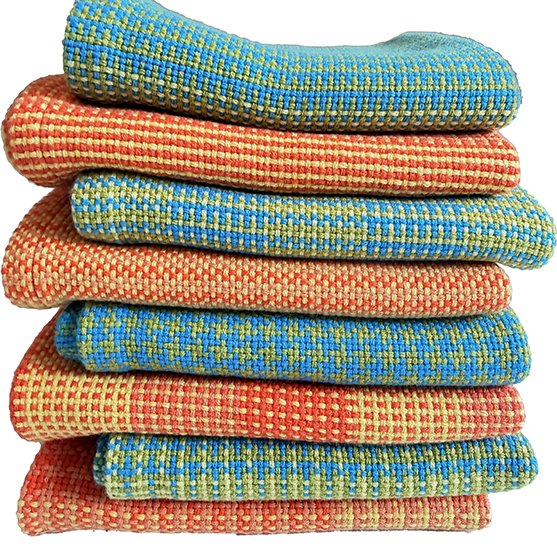
Color-and-Weave on the Rigid-Heddle
Instructor: Joan Sheridan
Type: 1-day | Rigid-heddle class
Plain weave doesn’t have to be plain! By arranging colors in a certain way, you can create graphic, complex-looking patterns that play tricks on the eye. Learn how to warp your loom to create these effects, how to weave tidy selvedges, and how to read a weaving pattern. In class, you will warp for a color-and-weave sampler that can be used for later reference—or as fabric to make a colorful potholder, pouch, or something of your own inspiration.
-
Rigid-heddle
-
EQUIPMENT AND TOOLS
Rigid-heddle loom, 9" or larger weaving width
12- or 12.5-dent heddle
Three 10- to 12-inch stick shuttles, or three boat shuttles with bobbins
Threading and sleying hooks
Warping peg
Clamps
Warp separator (warping sticks, kraft paper, or paper grocery bags)
Scissors
Tape measure
Tapestry needle
YARN
Warp and weft: 8/4 cotton, 1 tube each in three different colors (light, medium, and dark).
-
None
-
Looms will be warped during class.
Instructor will provide a class handout.
-
Students must be able to warp a rigid-heddle loom and weave plain weave.
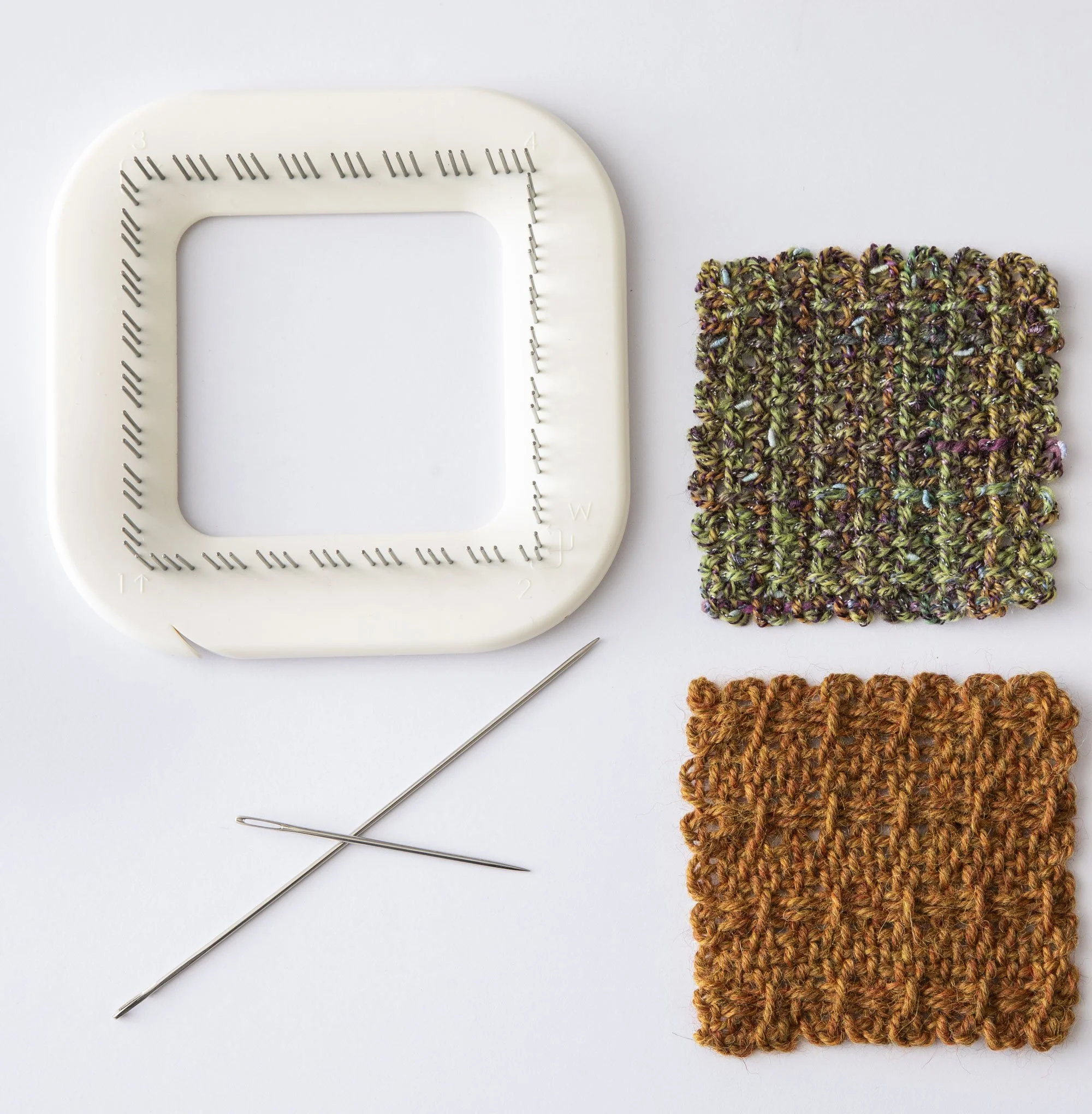
Adventures in Pin-Loom Weaving: Basics and Beyond
Instructor: Angela Tong
Type: 1-day | Pin-loom class
No previous weaving experience required.
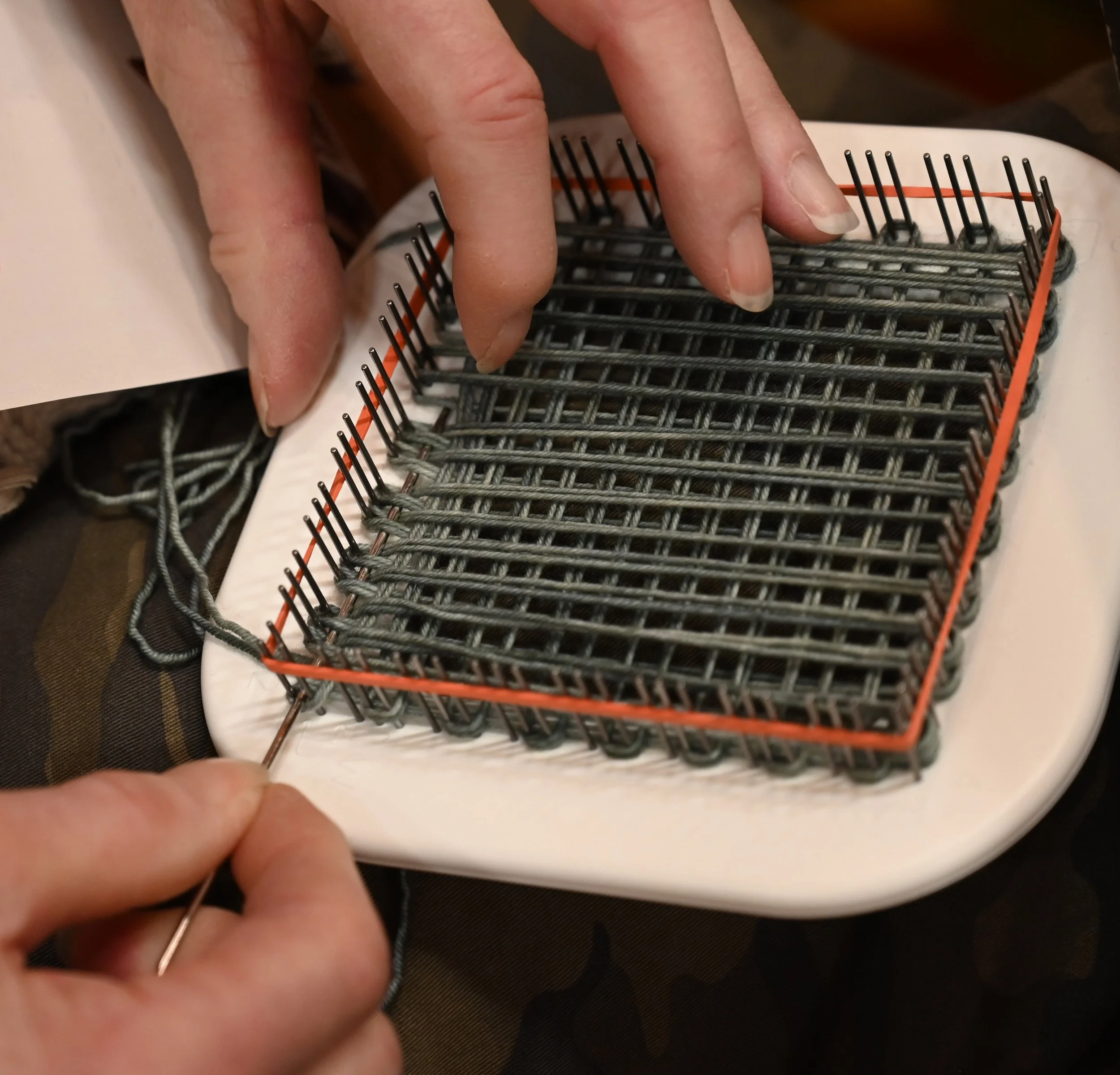
Ever wonder what pin looms can do? Angela will show you, teaching you to warp and weave on a 3-pin-style loom before guiding you into the fun world of pattern-weaving techniques that turn plain weave into rich texture. Along the way, you’ll pick up her tips for taming tension, weaving a clean last row, and joining your pieces so those little squares become real fabric.
-
Pin
-
EQUIPMENT/TOOLS
3-pin-style square loom such as Zoom Loom or Weavette
6" weaving needle
3" yarn needle
Scissors
YARN
A variety of yarns. Specifics will be emailed to students a month before the event.
-
A notebook and pen/pencil.
-
None
-
None
Tuesday Classes - 2027 Event
Note: Some classes below are 3-day or 2-day classes. Please check the class type and description for more details. Have additional questions about the classes? Are you curious which ones are beginner-friendly? Contact us at [email protected].
Expand Your Rug Weaving Repertoire
Instructor: Tom Knisely
Type: 2-day | Multi-shaft class | Day 2 (looms provided)
Continues from Monday. See the class description and details in the Monday class listing.
Class is currently at capacity. Waitlist requests can be made during class selection.
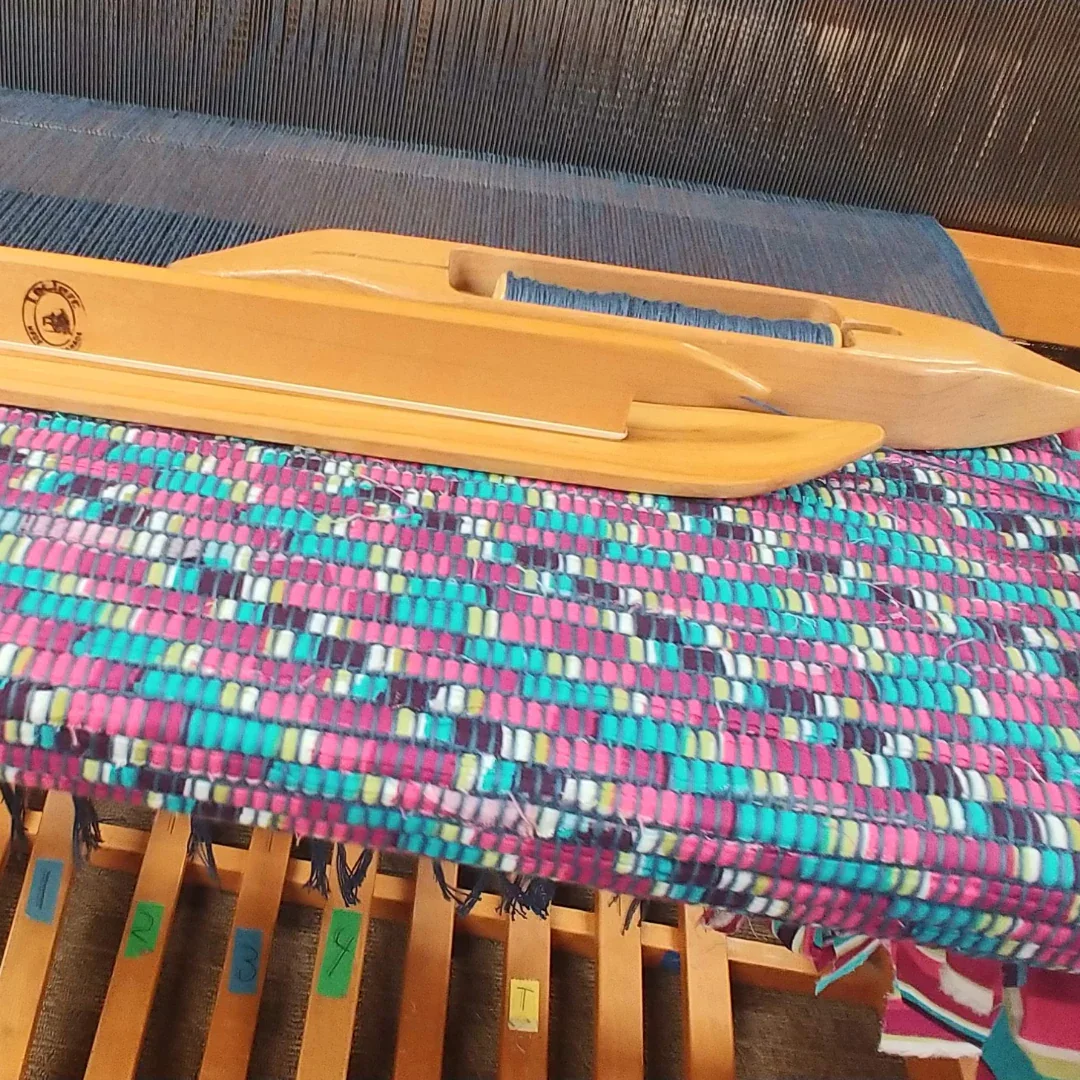
Rag Weaving that Zigs and Zags
Instructor: Sara C. Bixler
Type: 1-day | Multi-shaft or Rigid-heddle class
In this fun approach to rag weaving, we’ll use colorful striped fabrics to create handwoven pieces with graphics that zig and zag or roll like waves. Learn about the best materials to create this lively result and understand how to choose and place colors effectively as you explore this unusual intersection of color and pattern in plain weave. You’ll take home a sampler placemat or two—and the knowledge to weave your own zigzag projects.
-
Rigid-heddle or multi-shaft
-
EQUIPMENT AND TOOLS
Multi-shaft option:
Four-shaft table or floor loom, 14" weaving width or larger, pre-warped
12-dent reed
1 stick or ski shuttle
1 boat shuttle and bobbin
Rigid-heddle option:
Rigid-heddle loom, 14" weaving width or larger, pre-warped
12-dent heddle
2 stick or ski shuttles
All students:
Scissors
Tape measure
YARN/FABRIC
Warp and tabby weft: 5/2 pearl cotton, one color, 800 yards.
The instructor will provide weft fabrics.
-
5/2 pearl cotton in an alternate color, if you want to play with your tabby color
Rotary cutter and self-healing cutting mat
Notebook and pen/pencil
-
Looms must be pre-warped, following instructions that Sara will provide via email before the class.
The instructor will provide weft fabrics.
A bobbin winder will be provided for your use during class.
-
Suitable for beginning to intermediate weavers; however, students must be able to warp their loom before class.
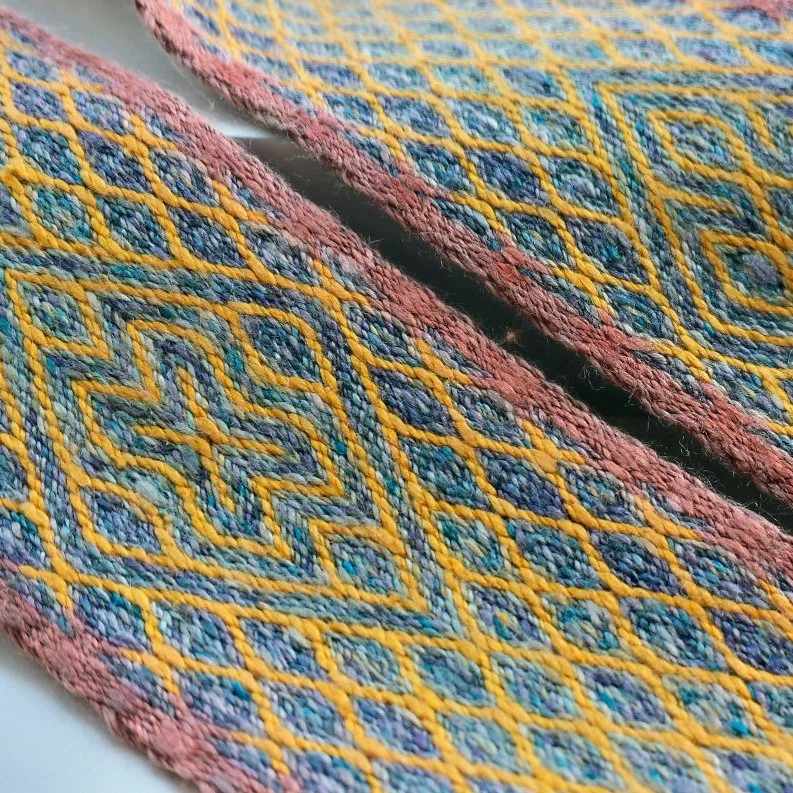
Weave Coptic Diamonds
Instructor: John Mullarkey
Type: 1-day | Tablet-weaving class
Go back in time a thousand years and learn to use tablets to weave Coptic diamond designs. Nineteenth-century archaeologists uncovered a treasure trove of ancient Egyptian cloth, including tablet-woven bands featuring these exquisite patterns. Start by learning to read drafts for this technique, then weave these distinctive patterns yourself and create your own Coptic-inspired designs.
-
Inkle
-
EQUIPMENT AND TOOLS
Inkle loom, full-size (Note: Ashford Inklette is too small)
Twenty-four 4-hole cards
Belt shuttle
Scissors
YARN
5/2 to 10/2 mercerized or unmercerized cotton or #10 crochet thread in two colors. Before class, prepare three ½-oz balls of a light color, and one ½-oz ball of a darker, highly contrasting color. Note: There will not be time in class to wind off, so please come prepared with four yarn sources.
-
None
-
See Prerequisites
-
Though previous tablet-weaving experience isn’t required, someone brand new to tablet weaving will need extra patience and concentration. We recommend taking John’s Tablet Weaving 101 class on Monday as a primer.
Welcome to the Color Playground—No Theory Required!
Instructor: Véronique Perrot
Type: 3-day | Multi-shaft class | Day 2
Continues from Monday. See the class description and details in the Monday class listing.
Dive Into Deflected Doubleweave
Instructor: Angela K. Schneider
Type: 2-day | Multi-shaft class | Day 2
Continues from Monday. See the class description and details in the Monday class listing.
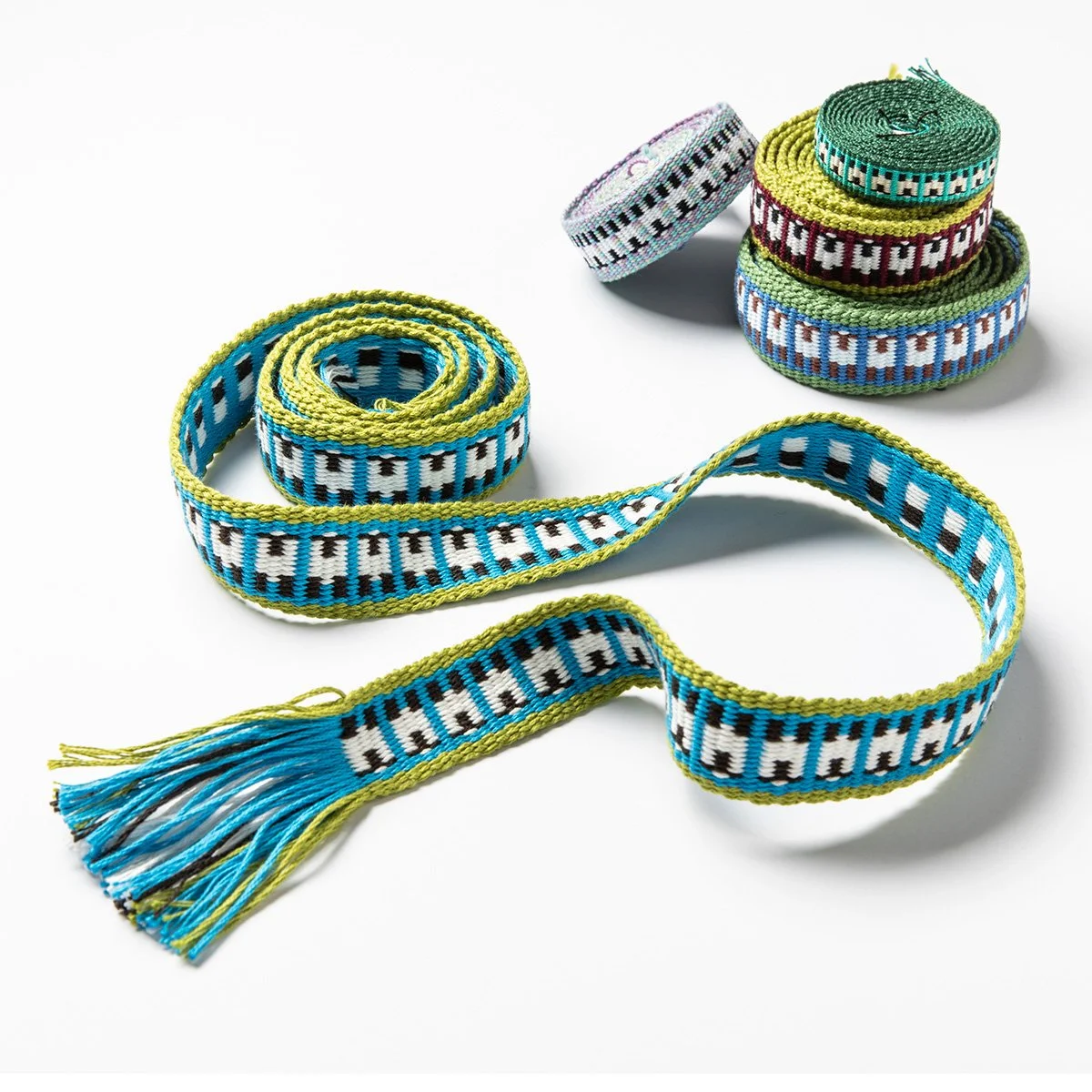
Weave a Flock of Sheep on the Inkle Loom
Instructor: Joan Sheridan
Type: 1-day | Inkle class
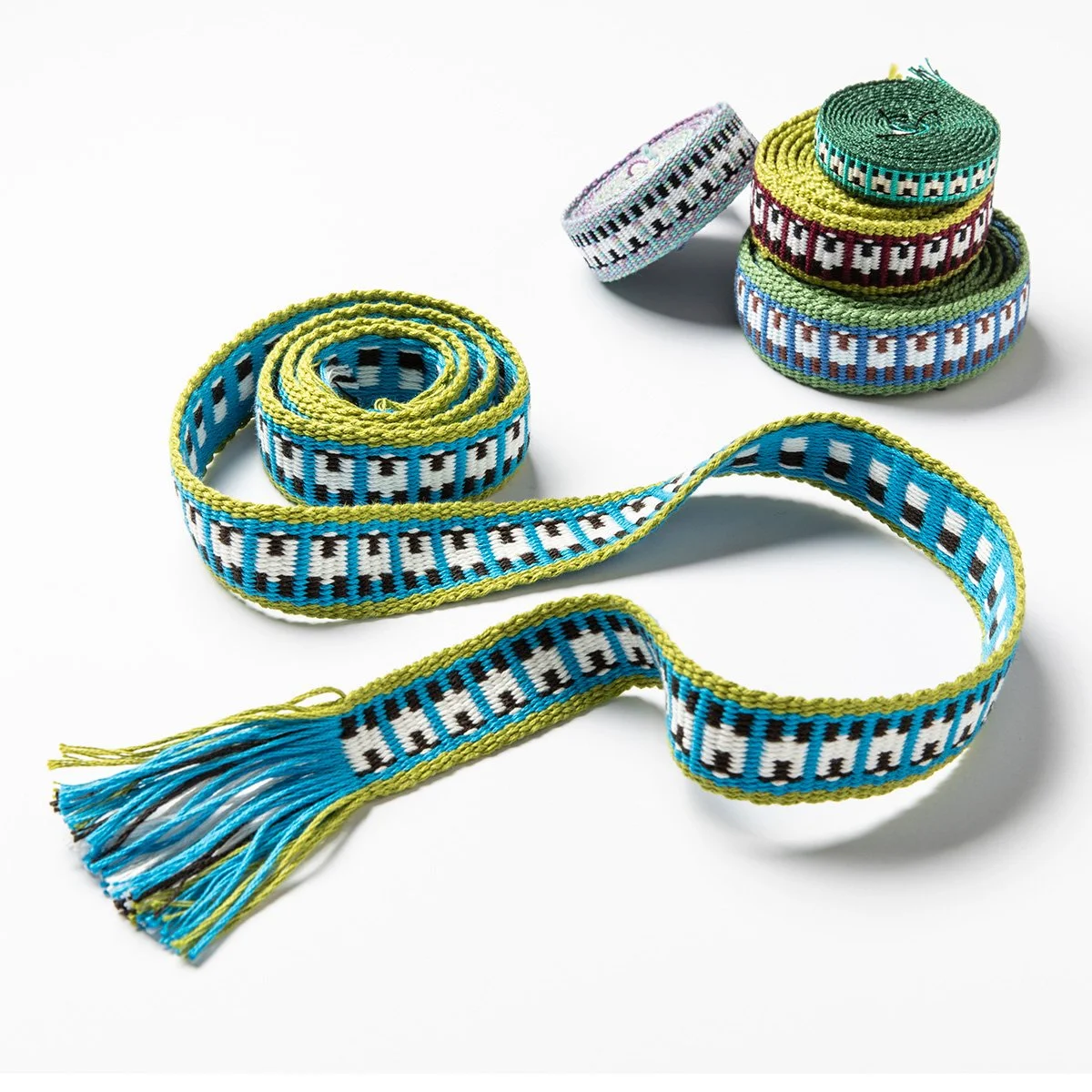
Once you’ve mastered the basics of plain weave on the inkle loom, take your bands to the next level with turned krokbragd, a warp-faced Scandinavian-inspired technique. You’ll learn how to warp an inkle loom with three sets of heddles, how to read a pattern, and how to weave the krokbragd sequence. The magic of turned krokbragd happens in the setup, making the weaving easy. You’ll leave the class with a sweet sheep band and the knowledge you need to weave more turned krokbragd.
-
Inkle
-
EQUIPMENT AND TOOLS
Inkle loom, full size, with open sides
30 double heddles (see Notes from Instructor)
Belt shuttle
Scissors
YARN
Four colors of 8/4, 3/2, or 5/2 cotton: black and white for the sheep, a background color, and a selvedge color.
-
None
-
For Joan’s tutorial on making double heddles for the inkle loom and a link to a companion PDF, visit this link. Texsolv heddles in the appropriate size for your loom are also acceptable.
Instructor will provide a class handout.
-
Students must have experience warping and weaving on an inkle loom.
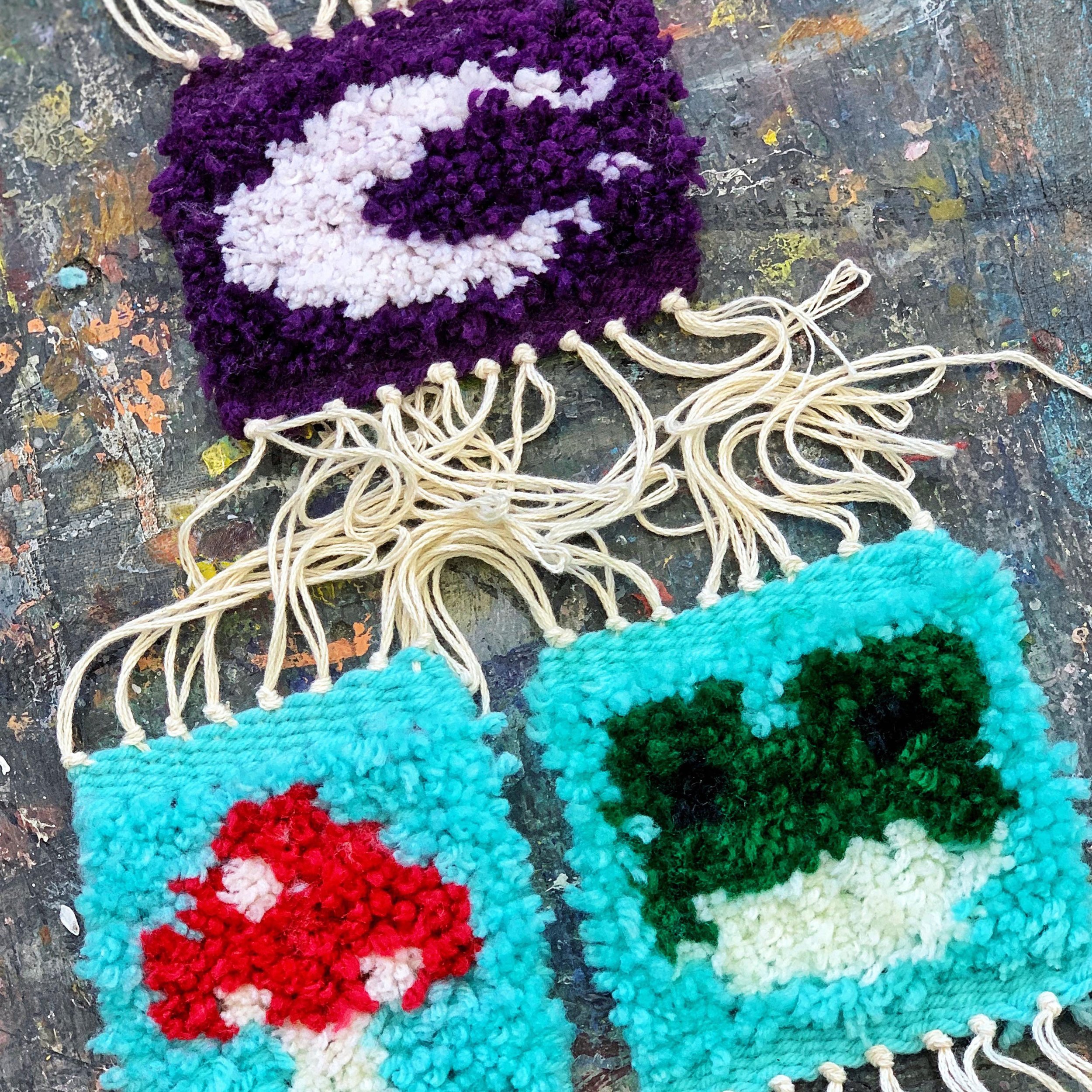
Pile on the Fun: Weave Pictures on the Rigid Heddle
Instructor: Angela Tong
Type: 1-day | Rigid-heddle class
Weavers have turned patterns into magic carpets for centuries using the simple hand-tied Ghiordes knot, and now you can, too! After you learn to make these knots, Angela will teach you how to take pictures, geometric motifs, and patterns from paper to fabric. You’ll learn how to graph your own designs and turn photos into charts that you can weave pixel by pixel. She’ll share tips for finishing your richly textured cloth, as well as other ways to use Ghiordes knots in your weaving. (Please note: This style of weaving involves repeated hand-manipulation of yarn, and requires finger and hand dexterity. See Prerequisites.)
-
Rigid-heddle
-
EQUIPMENT
Rigid-heddle loom, 8" or larger weaving width
10-dent heddle
1 stick shuttle
1 pick-up stick
Warping peg
Threading hook
Clamps for loom and warping peg
Warp separator (warping sticks, kraft paper, or paper grocery bags)
Bent-tip tapestry needle
Sharp standard-sized scissors (not embroidery shears or snips; fabric-specific scissors are not necessary)
Colored pencils
YARN
Instructor will provide all yarn.
-
Pixelated image to weave into fabric (see Notes from Instructor).
-
Instructor will provide information about appropriate images and how to prepare them for weaving before the event.
Students will warp their looms during class.
-
Students must be able to warp a rigid-heddle loom and weave plain weave.
The Ghiordes knot technique requires finger and hand dexterity. Students should be able to perform this repetitive movement independently for several hours. Please contact [email protected] if you have questions about participating in the class.
Wednesday Classes - 2027 Event
Note: Some classes below are 3-day classes. Please check the class type and description for more details. Have additional questions about the classes? Are you curious which ones are beginner-friendly? Contact us at [email protected].
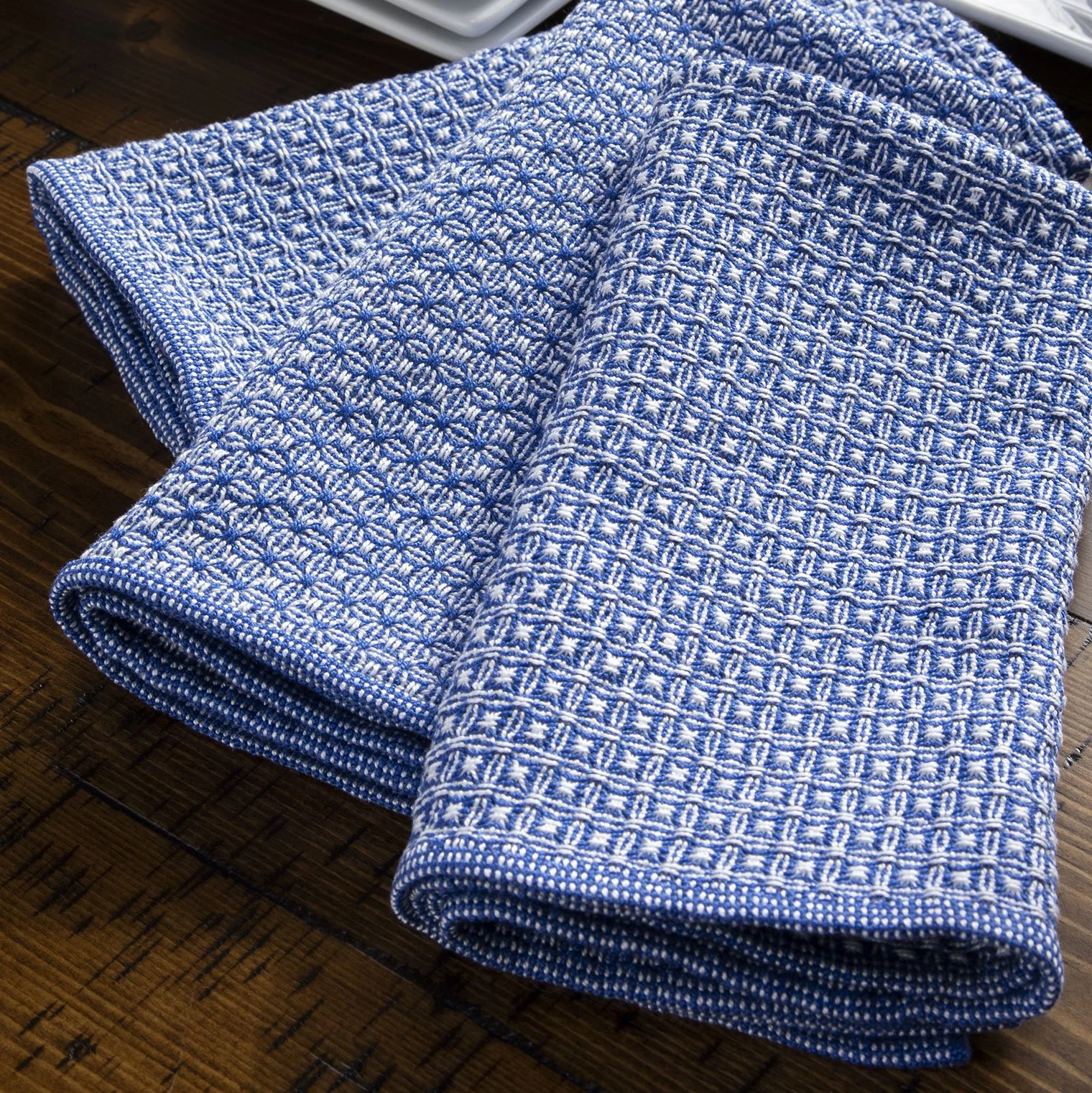
Power Up Huck with Color-and-Weave
Instructor: Tom Knisely
Type: 1-day | Skill-building class
(looms provided)
Learn to layer the graphic punch of color-and-weave with the patterning and texture of huck in this class, which combines lecture and demonstration. We’ll cover the fundamentals of how huck works and how to bring color-and-weave effects into the structure for even more depth in your patterning, plus give hands-on guidance on winding and sleying a warp for these complicated color arrangements. Along the way, you’ll study dozens of samples, passed around for close-up inspection and discussion. Pre-threaded four- and eight-shaft looms will be on hand so you can sample the techniques for yourself.
See Location Notes for information about where this class will be held.
-
Looms provided for demo (multi-shaft)
-
Notebook
Pen or pencil
Camera or cellphone for taking photos
-
None
-
This class combines demonstration, lecture, and hands-on elements.
-
Students should have a working knowledge of multi-shaft weaving and weaving drafts.
-
This class will be held offsite at the Red Stone Glen Fiber Arts Center and requires navigating a few steps to access the classrooms. If you have questions about this class, please contact us.
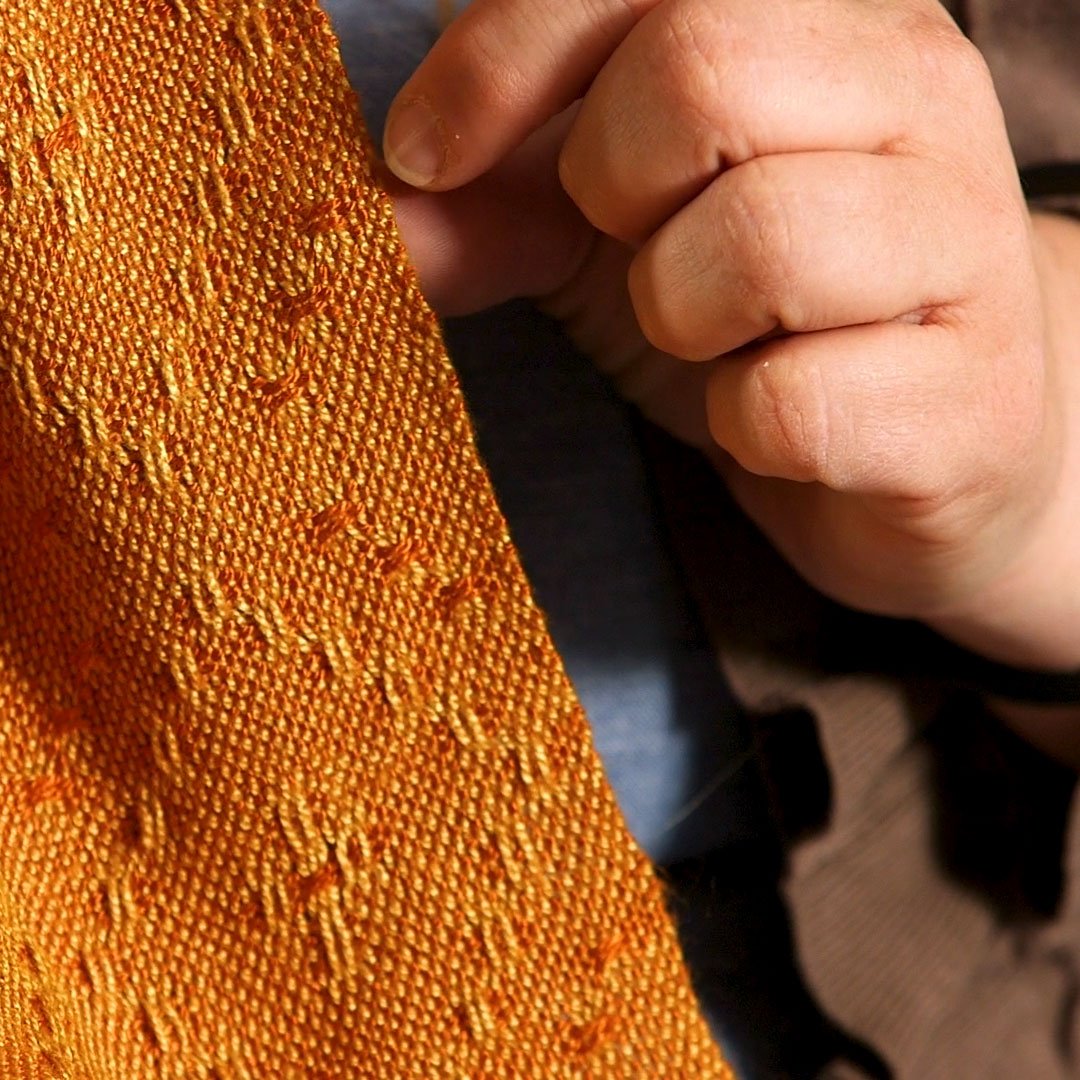
Weave Better Selvedges
Instructor: Sara C. Bixler
Type: 1-day | Skill-building class
(looms provided)
All levels welcome.
Do you wish your selvedges looked better? Sara is full of great ideas for improving them—everything from loom setup and helpful equipment to solutions for tricky structures, finishing options, and more. She’ll send a mountain of samples around the table for you to take a closer look.
Have selvedges you’re proud of, or problem edges needing solutions? Bring them along for show-and-tell! This is primarily a lecture class, but several warped looms from inkle to rigid-heddle to multi-shaft will be available to try out selvedge-weaving techniques.
-
Looms provided for demo (variety)
-
Notebook and pen/pencil.
-
Bring your own work—selvedges to show off, or problem edges for Sara to work with you on
Notebook and pen/pencil
Camera or cell phone
-
This class combines demonstration, lecture, and hands-on elements.
-
None
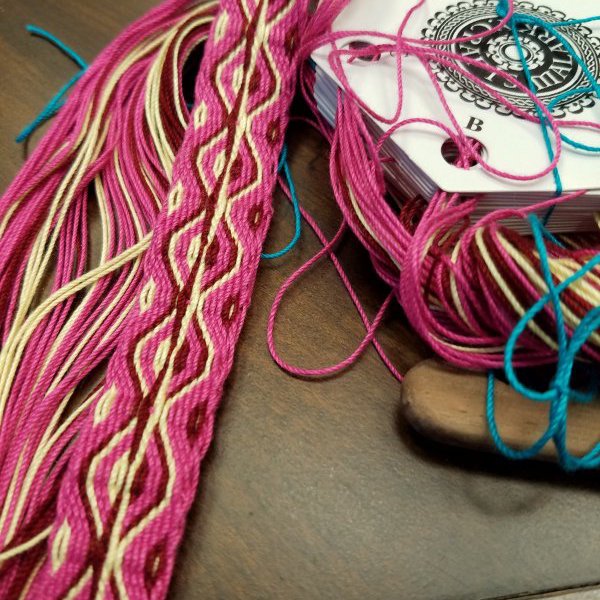
Step Up to Six-Hole Cards
Instructor: John Mullarkey
Type: 1-day | Tablet-weaving class
You’ve woven with 4-hole cards, but what happens when we move to 6-hole cards? These hexagonal cards add more colors to your tablet weaving, allowing for richer and more complex patterns. In this class, explore the differences between 4-hole and 6-hole cards as you warp and weave a threaded-in pattern created especially for 6 holes.
-
Inkle
-
EQUIPMENT AND TOOLS
Inkle loom, full-size (Note: Ashford Inklette is too small)
Belt shuttle
Scissors
YARN
5/2 to 10/2 mercerized or unmercerized cotton or #10 crochet thread in three colors, preferably light, medium, and dark, each at least 1 ounce.
-
None
-
Instructor will provide 6-hole cards for you to use in class.
-
Previous 4-hole tablet weaving experience required.
Welcome to the Color Playground—No Theory Required!
Instructor: Véronique Perrot
Type: 3-day | Multi-shaft class | Day 3
Continues from Tuesday. See the class description and details in the Monday class listing.
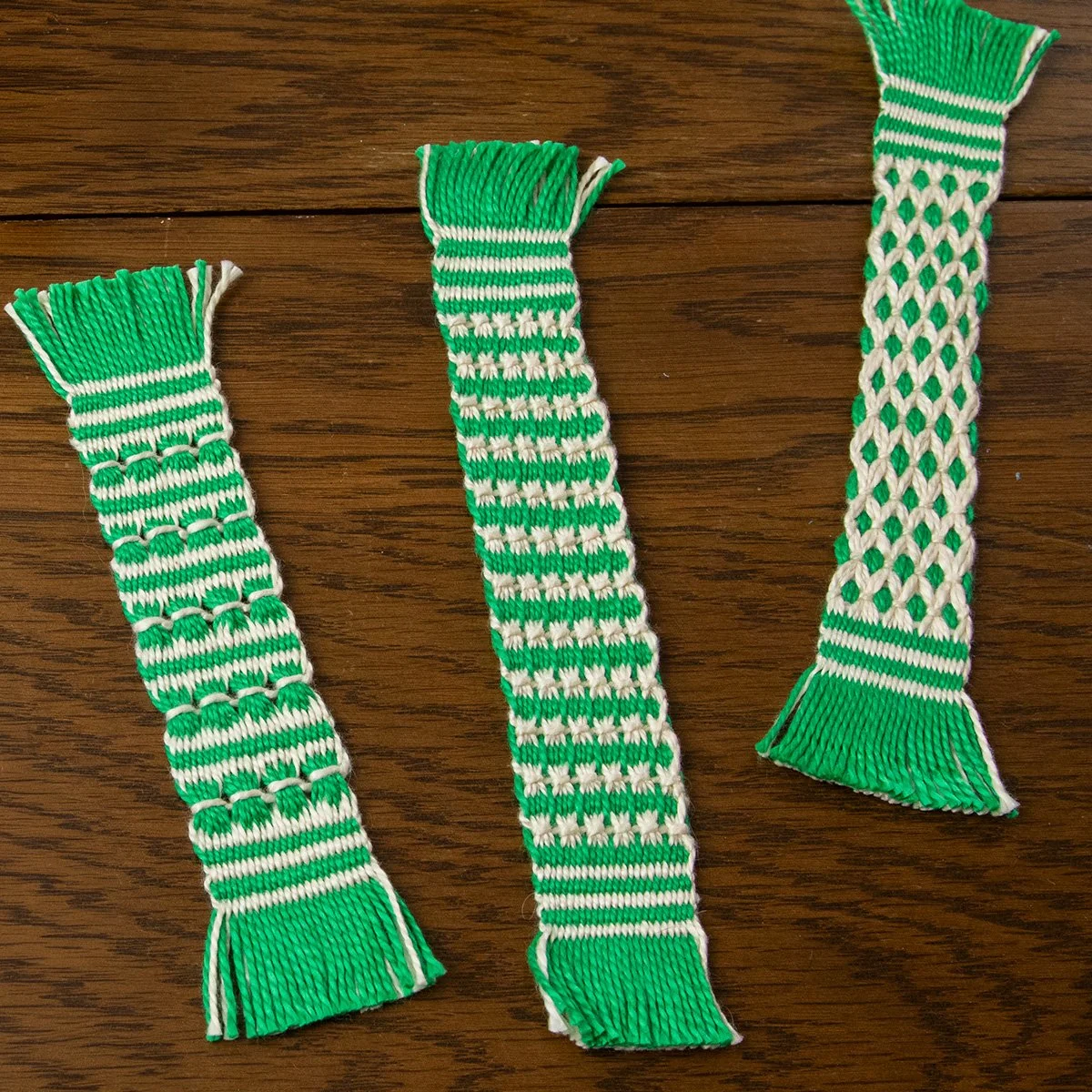
Lace-Inspired Explorations in Inkle Weaving
Instructor: Angela K. Schneider
Type: 1-day | Inkle class
Branch out into a new direction in inkle weaving with techniques Angela adapted from. . . lace? Yes! Inkle bands are dense, warp-faced, and distinctly not lacy, but apply hand-manipulated lace methods to this unexpected medium and open a range of fantastic textures. Weave lattices, bricks, little stars, and meandering trails. Learn how each technique works in a warp-faced context and weave multiple variations on your own loom. Break away from straight lines with wandering warp and weft, and make your next inkle bands unlike any other.
-
Inkle
-
EQUIPMENT/TOOLS
Inkle loom
24 heddles
Belt shuttle
Small pick-up sticks
Small crochet hook (about 2–2.5 mm)
Sewing gauge or small ruler
YARN
Warp and weft: 5/2 or 3/2 pearl cotton, carpet warp, crochet cotton, or a similar smooth, strong yarn; 2 contrasting colors of the same weight yarn, 80 yd each.
-
Scissors
-
Students will warp their looms during class (see Prerequisites).
Instructor will provide a class handout.
-
Students must be able to independently warp an inkle loom and weave plain weave.
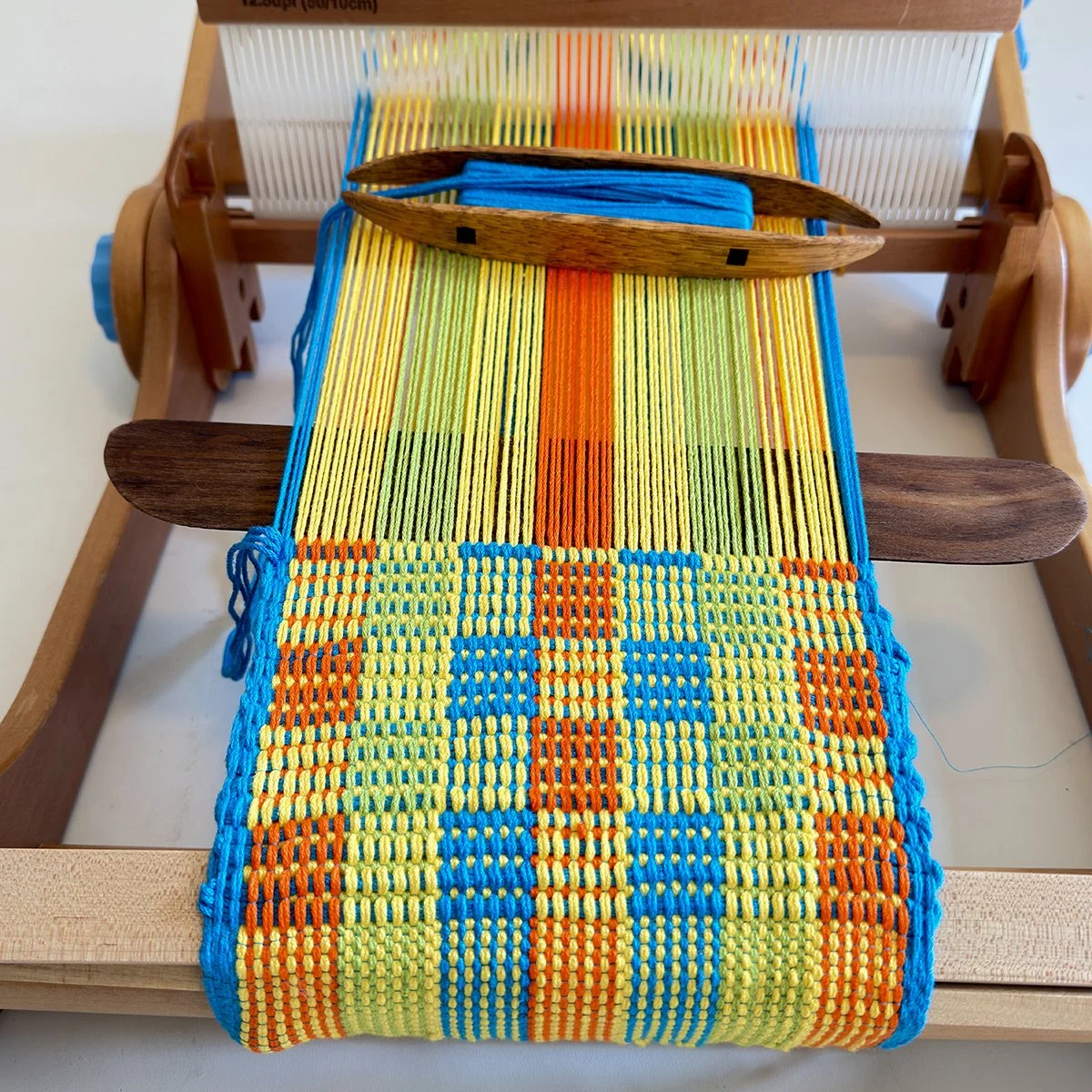
Rep Weave on the Rigid-Heddle
Instructor: Joan Sheridan
Type: 1-day | Rigid-heddle class
You might think that rep weave can only be woven on a floor loom, but in this class, you’ll learn to stretch the rigid-heddle loom beyond its usual limits. Explore how to use yarn size to create blocks of color, turning simple plain weave into graphic, almost pieced-looking patterning. The warp-faced structure is dense and substantial, making it perfect for sturdy upholstery-type projects.
-
Rigid-heddle
-
EQUIPMENT AND TOOLS
Rigid-heddle loom, 6–8" weaving width or larger
12- or 12.5-dent heddle
Two 10-inch stick shuttles
Beveled-edge weaving sword or batten
Threading and sleying hooks
Warping peg
Clamps
Warp separator (warping sticks, kraft paper, or paper grocery bags)
Scissors
Tape measure
YARN
Omega Sinfonia (cotton; 100 gm/218 yd), one skein each in four to six different colors.
16/2 cotton or sewing thread to match the darkest color of Sinfonia.
-
None
-
Instructor will provide a class handout.
-
Students must be able to warp a rigid-heddle loom and weave plain weave.
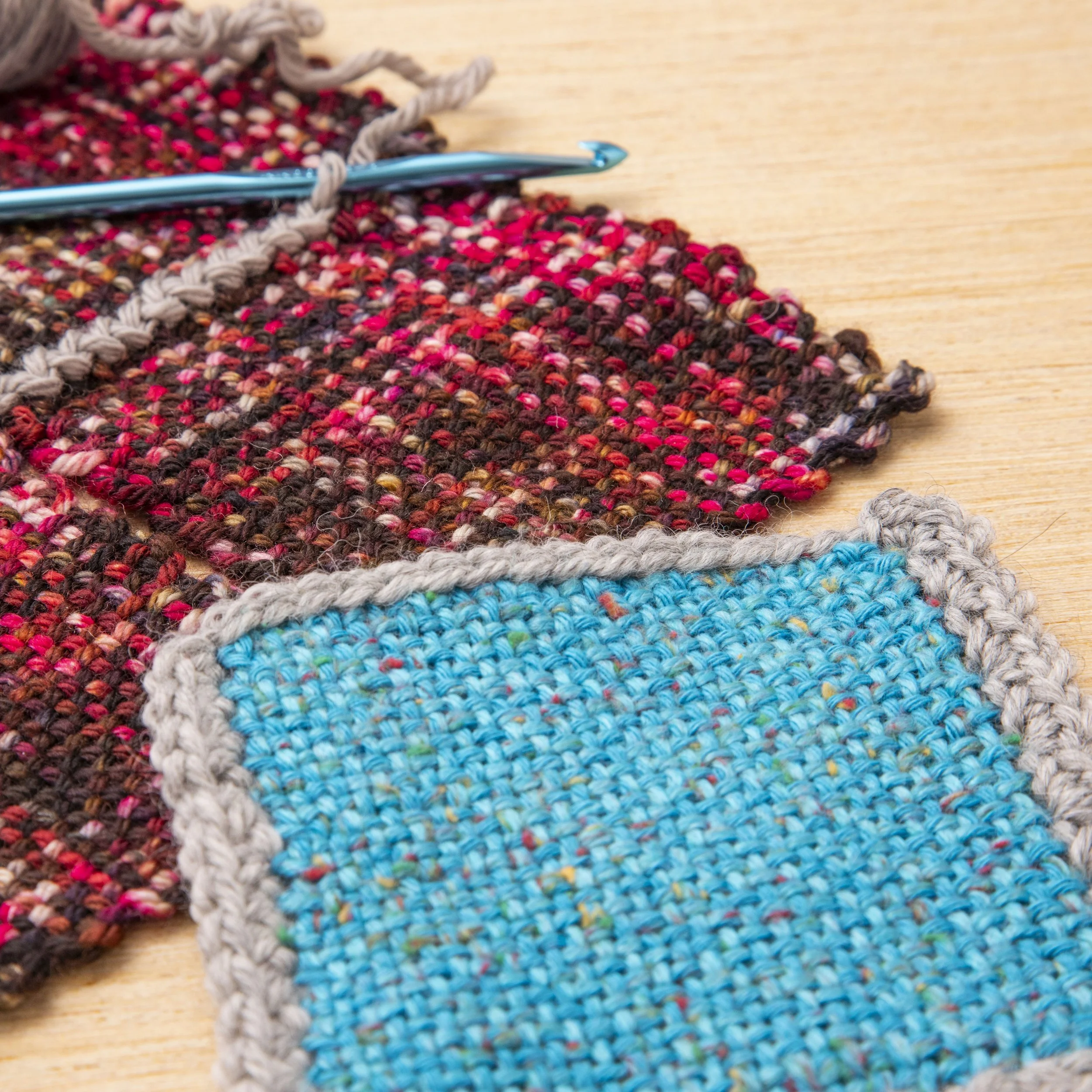
Elevate Your Edges and Joins
Instructor: Angela Tong
Type: 1-day | Finishing class
All levels welcome.
Discover how a little seaming know-how turns your handwoven squares and rectangles into professional-looking finished items. Start by learning how to join your pieces using the simple whipstitch, then go beyond the basics with a beautiful crochet seaming technique. You’ll also learn how to properly stabilize your cloth so you can cut it without fear, how to blindstitch hems for a nearly invisible finish, and how to elevate your edges with decorative borders—including crochet and knitting techniques.
-
None
-
Handwoven fabric and/or pin-loom pieces (see Notes from Instructor)
Small put-ups of stash yarn
Bent-tip tapestry needle
Sharp standard-sized scissors (not embroidery shears or snips; fabric-specific scissors are not necessary)
Crochet hook and/or knitting needles (see Notes from Instructor)
-
Fabric scissors and/or rotary cutter and a self-healing cutting mat.
-
Before the event, instructor will provide information about items to bring, including:
Handwoven fabrics and/or pin-loom pieces
Crochet hooks/knitting needles
-
None
What About Equipment?
Please plan to bring your own looms if possible. You’re already comfortable working on them, and at the end of the retreat, you can take home any of your work in progress. But if your travel plans will make that challenging, or if you’re taking a class on a new-to-you loom, we’ll make arrangements to borrow a limited number of looms from local weavers and companies.
About 2-3 months before the event, we’ll send out an equipment survey and rental options for your classes.

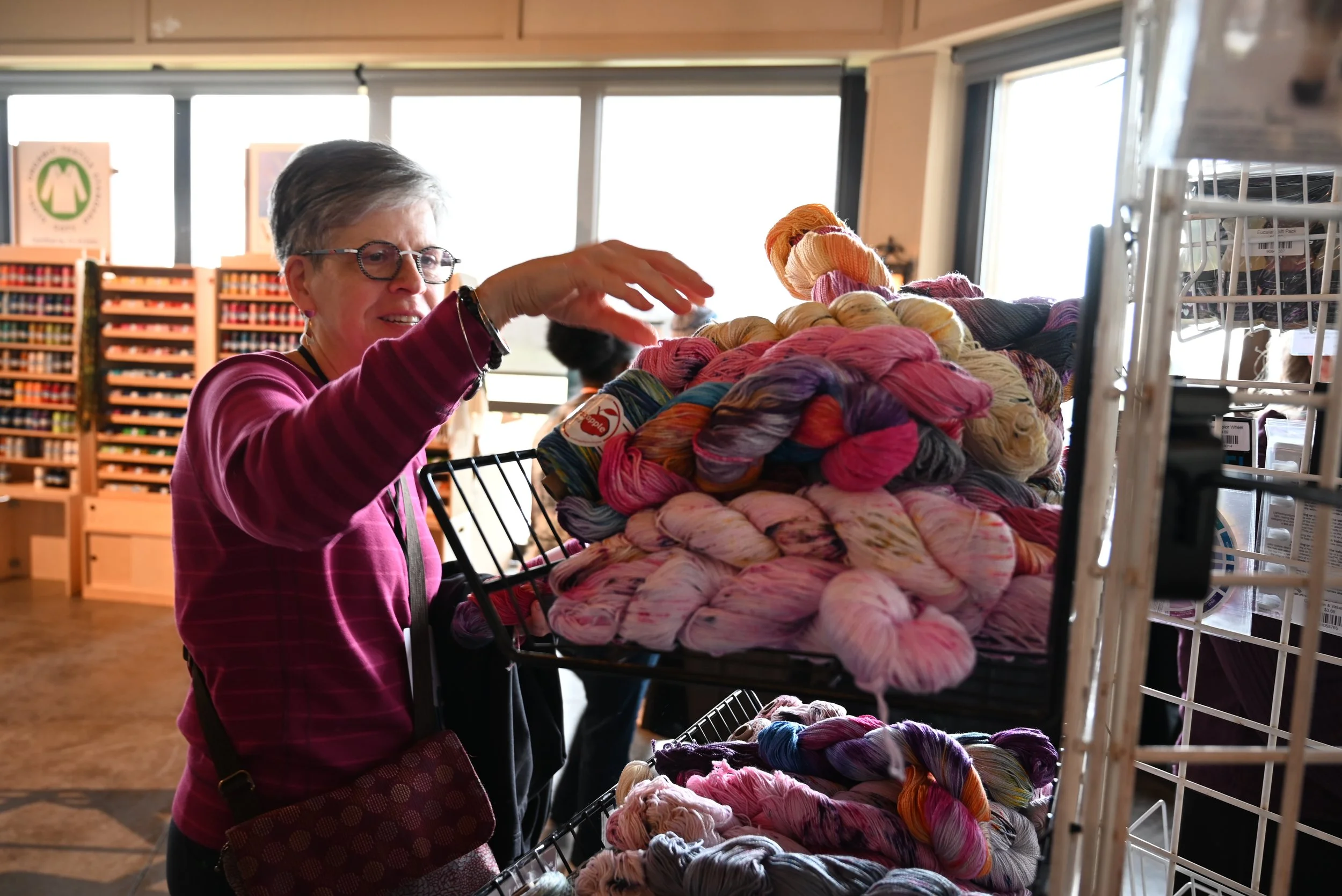

Meet the 2027 Instructors
At Weave Together, you’ll learn from some of the most renowned weavers and fiber artists in the world. This year’s all-star lineup includes these new and returning instructors.
-
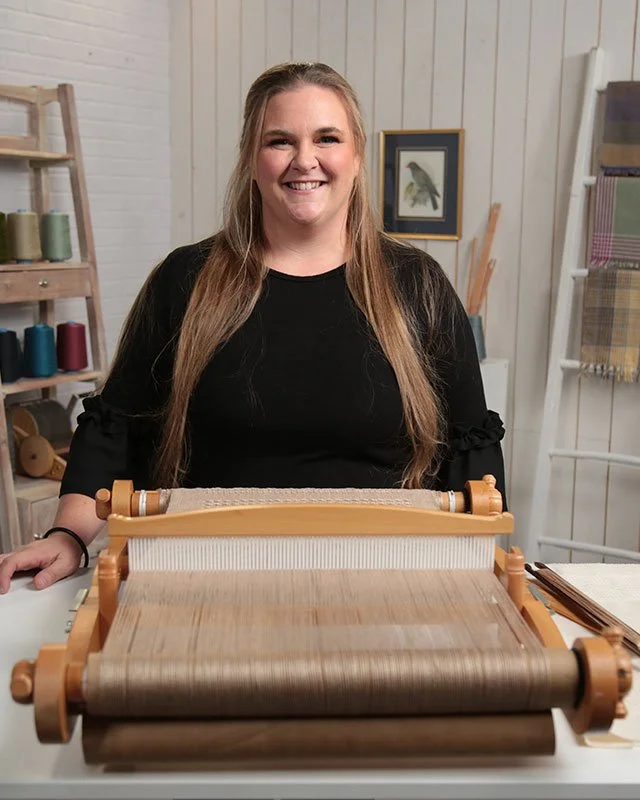
Sara C. Bixler
Sara C. Bixler is the owner and resident instructor of Red Stone Glen Fiber Arts Center in York, Pennsylvania. She has been teaching spinning and weaving for more than a decade and prides herself on having a broad knowledge spectrum to share with her students. She holds degrees in both fine art and education, although she credits the depth of her knowledge to her apprenticeship with her father, Tom Knisely. You can find Sara’s work in issues of Handwoven and Little Looms and see her in person or in one of her many weaving videos. Hear her talk about her teaching and weaving journeys on the Long Thread Podcast.
-
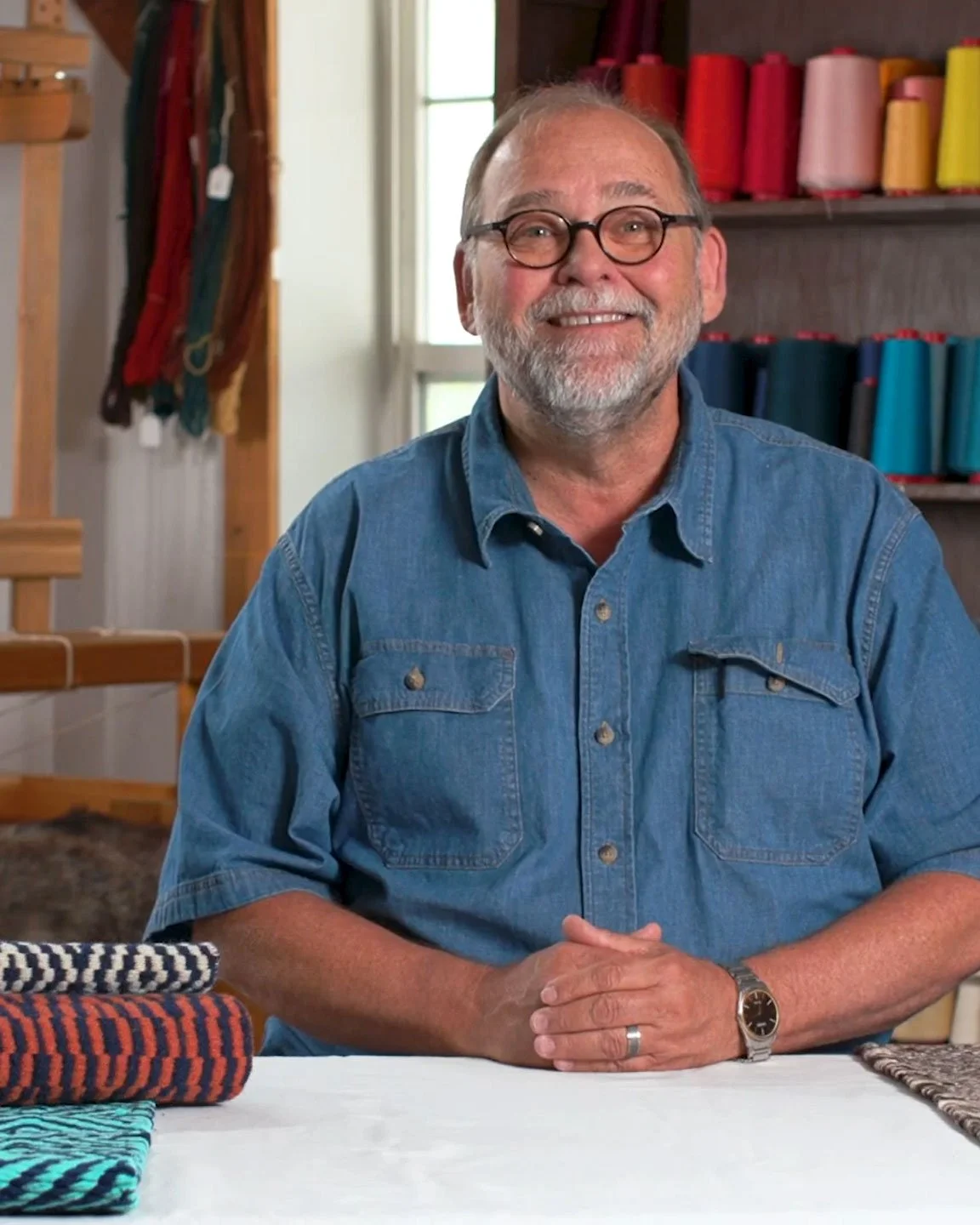
Tom Knisely
Tom Knisely has been teaching handweaving for more than forty years. After discovering an antique spinning wheel as a teenager, he fell in love with textiles and has devoted his career to sharing that passion. In addition to teaching, Tom weaves professionally and is a frequent contributor to Handwoven magazine. Voted Handwoven Teacher of the Year, Tom is renowned among his weaving students for his kindness, good humor, and seemingly infinite weaving knowledge. He teaches at the beautiful Red Stone Glen Fiber Arts Center in York Haven, Pennsylvania. Hear him on the Long Thread Podcast.
-

John Mullarkey
John Mullarkey is passionate about teaching tablet weaving and exploring ways to make the art form more contemporary. John loves to push “primitive” art of tablet weaving beyond its customary limits to create original and surprising interpretations of traditional structures and designs. He is a nationally recognized teacher, valued for the patience, clarity, and organization he brings to his classes. John left his software development career more than a decade ago to focus on weaving and teaching full-time. Enjoy our podcast with John Mullarkey, or this artist spotlight article, to learn how he came across the ancient craft of tablet weaving and fell in love with teaching.
-

Véronique Perrot
Véronique Perrot first encountered weaving as a teenager after building a four-shaft floor loom out of scrap wood and weaving a few pieces on it. The loom soon returned to the woodpile, but she was hooked. Loom-less for many years, she knitted a lot and read about weaving. On a whim, Véronique bought a loom on Craigslist, took a weaving class at the John C. Campbell Folk School, and hasn’t stopped weaving since. She has written patterns and articles for Handwoven and WEFT, many of them focused on color. Véronique has taught many subjects to various groups—biology and earth sciences to high schoolers, beekeeping to community gardeners, and color in weaving at the Folk School, for example—yet her proudest achievement was teaching lace knitting to her mom.
-
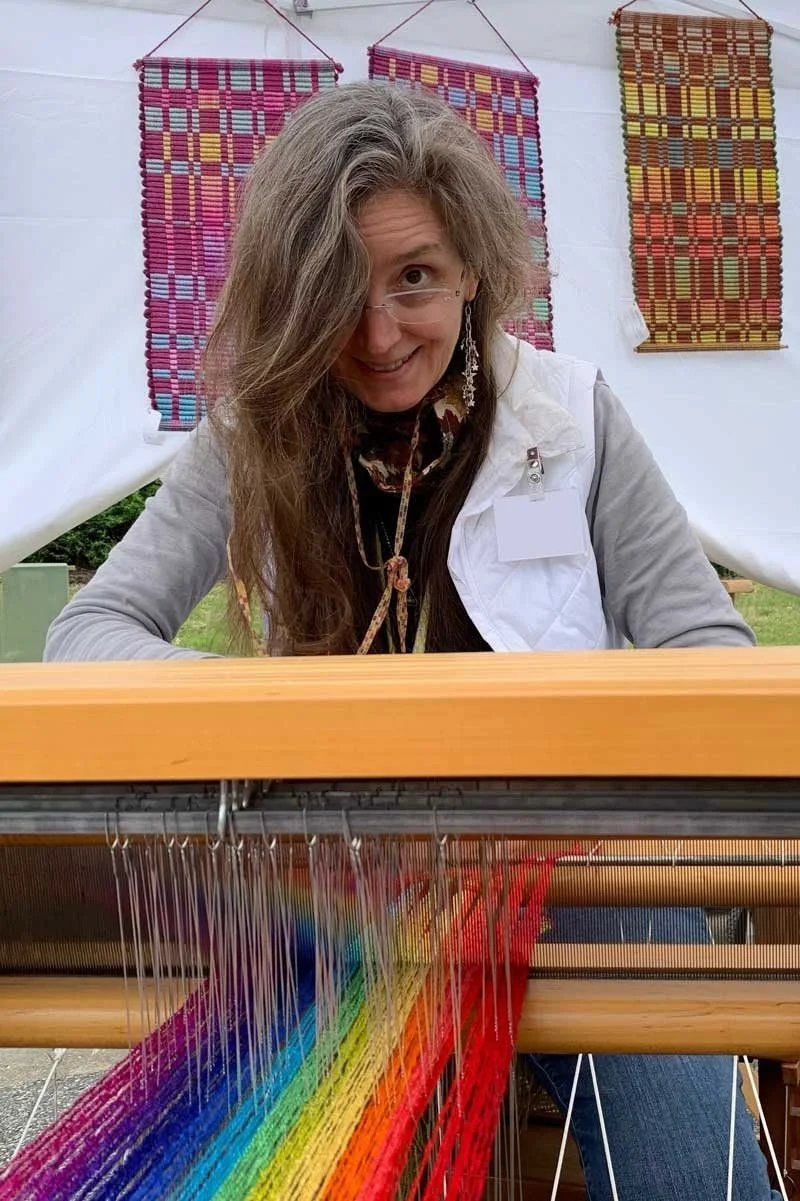
Angela K. Schneider
Angela K. Schneider is a techie and an artist—but above all, a teacher. As Long Thread Media’s project editor, she checks and double-checks project instructions in an impressive range of fiber arts. Her designs appear in Handwoven and Little Looms magazines, and she has created everything from delicate jewelry to massive woven installations for public spaces. With a background balancing programming, engineering, and art, plus a Master Spinner Certificate from Olds College, she relishes getting down in the details to understand a textile. One of her greatest joys comes from watching her students’ eyes light up with understanding. Learn more about her weaving and teaching adventures in Five Questions with Angela K. Schneider.
-
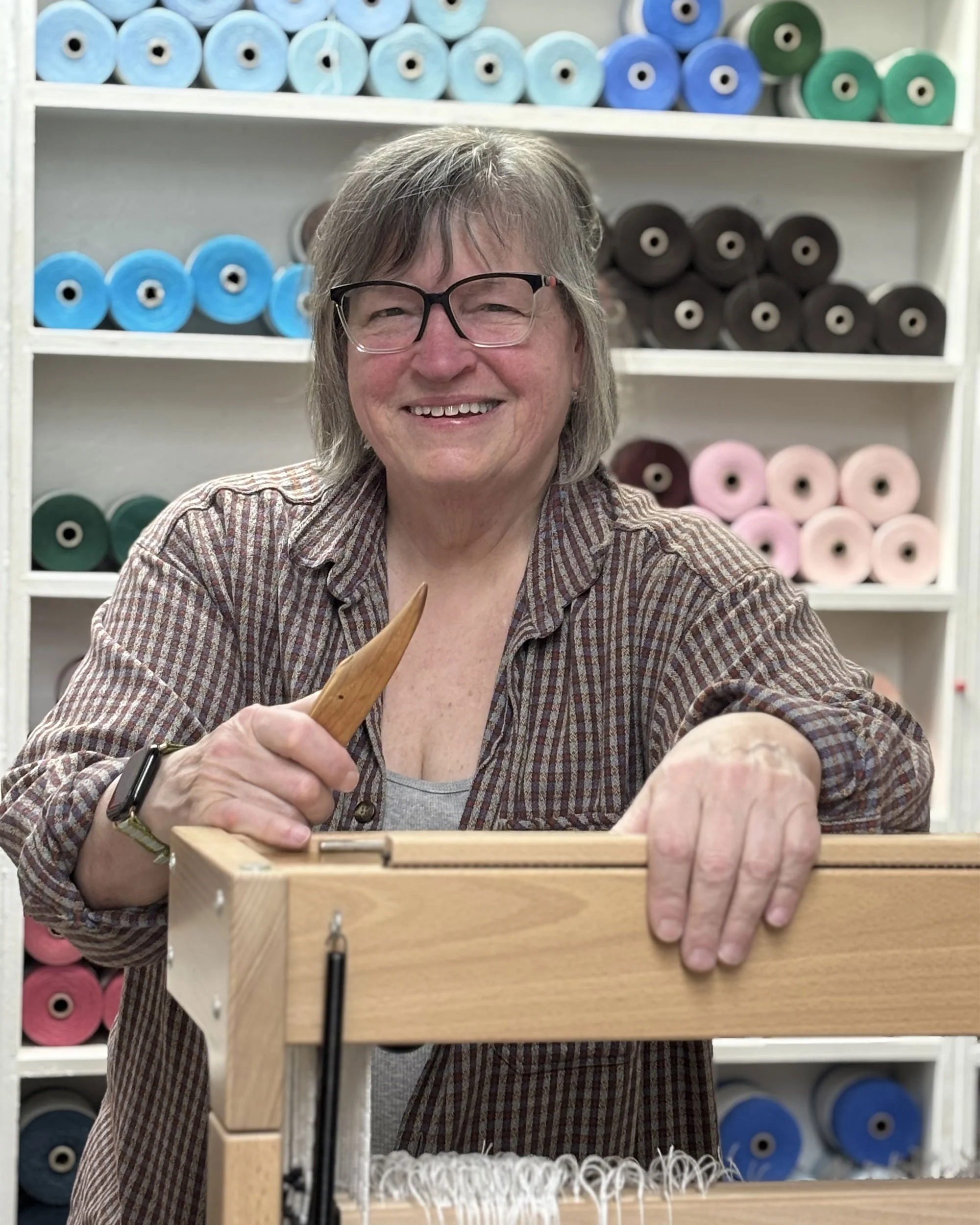
Joan Sheridan
Joan Sheridan is a weaver, knitter, spinner, and fiber explorer. After serving as an educator and curriculum developer for the U.S. Army, she founded Heritage Spinning and Weaving in 2000. She teaches weaving and knitting in her shop and on the road for guilds, shops, and conferences. Her patterns and articles have been published in Handwoven, Spin Off, Ashford’s The Wheel, and PieceWork, and she is a regular contributor to Little Looms. A beloved teacher on looms of all sizes, she has a particular enthusiasm for teaching and designing for small looms. Joan is never bored and revels in the fiber community.
-

Angela Tong
Angela Tong is a Chinese American fiber artist and ceramicist based in Pennsylvania. Although she studied design at the Fashion Institute of Technology, she discovered knitting and other fiber arts on her own. Her work spans knitting, crochet, and weaving. A dedicated teacher, she leads workshops across the country and online, encouraging makers of all levels to explore new skills. Angela’s weaving designs appear in Little Looms, and her instructional videos include Weave Patterns on the Pin Loom. Get to know her in the feature Five Questions with Angela Tong and hear her on the Long Thread Podcast.
2027 Itinerary
Classes and activities for multi-shaft AND small-loom weavers alike! More details for the event and class information will be added soon. Schedule is subject to change.
Sunday
Registration begins at 4 pm
Marketplace Opens!
Welcome Dinner & Introductions
Monday
Breakfast
9 am - 12 pm Morning Class Session (3 hours)
Lunch and Marketplace Shopping
1:30 - 4:30 pm Afternoon Class Session (3 hours)
Marketplace Shopping, Dinner, and Evening Activity
Tuesday
Breakfast
9 am - 12 pm Morning Class Session (3 hours)
Lunch and Marketplace Shopping
1:30 - 4:30 pm Afternoon Class Session (3 hours)
Marketplace Shopping, Dinner, and Evening Activity
Wednesday
Breakfast
9 am - 12 pm Morning Class Session (3 hours)
Lunch and Final Marketplace Hours
1:30 - 4:30 pm Afternoon Class Session (3 hours)
Dinner and Evening Activities
Thursday
Breakfast
Checkout & Farewell
Marketplace Hours
Sunday 4 - 6 pm | After Dinner/Welcome
Monday 12 - 1:30 pm | 4:30 - 6 pm | After Dinner
Tuesday 12 - 1:30 pm | 4:30 - 6 pm | After Dinner
Wednesday 12 - 1:30 pm (Final Hours)
Meet our Event Sponsors
-

Long Thread Media
Long Thread Media serves content for the handweaving, knitting, handspinning, and traditional needlework communities online, in person, and in print. The company was founded in 2019 by Linda Ligon, Anne Merrow, and John Bolton. We are proud to publish Handwoven, Easy Weaving with Little Looms, Farm & Fiber Knits, PieceWork, and Spin Off, as well as offer information, education, and community to crafters in those fields.
Learn More
Frequently Asked Questions (FAQ)
What classes will be offered?
Classes will cover a variety of looms and topics each day, with many options to choose from as you build your schedule. Whether you are a multi-shaft weaver or love small looms like pin, inkle, or rigid-heddle, we’ve got classes with expert instructors that fit your interests.
How long are the classes?
Whether you yearn to learn a new technique or develop your existing weaving skills, we have something for you in this all-inclusive weaving retreat. To build your custom three-day workshop schedule, you’ll choose from a variety of options, including:
- 3-day and 2-day intensives
- 1-day focused courses
Class sizes will be small and centered on learning while doing in a stress-free environment.
Can I take just one class?
Because Weave Together is an immersive experience with activities outside class time, classes are available only as part of a 4-day package.
When do I choose classes?
Participants will be invited to choose classes immediately after purchasing your event ticket. Look for the welcome email and the class survey to arrive shortly after your purchase is complete. To increase your chances of getting your top picks, be sure to complete your class survey and selections as soon as possible.
Can a beginning weaver come to Weave Together?
We have attendees with a range of skill levels and welcome those early in their weaving journey. Class descriptions will indicate which sessions don’t require prior weaving experience and what equipment will be needed. We’d be happy to help answer any specific class questions you have. Please email [email protected], and we’ll be in touch.
What if I don’t have a loom or the required equipment?
You should plan to bring your own looms if that’s possible. You’re already comfortable working on them, and at the end of the retreat, you can take home any of your work in progress. But if your travel plans will make that challenging, or if you’re taking a class on a new-to-you loom, we’ll make arrangements to borrow a limited number of looms.
About 2-3 months before the event, we’ll send out an equipment survey and rental options for your classes.
Is the event handicapped accessible?
Heritage Hills Resort offers a range of facilities for people of all abilities, and you can learn more on their website. If you have difficulty with mobility, please let us know at [email protected] so we can provide further details.
Can my spouse/companion attend?
Long Thread Media needs to pre-approve spouses/companions in advance of the event to ensure that we can accommodate them. Due to space limitations, spouses/companions may not attend classes, meals, or activities without pre-approval, and additional charges may apply. Please email our Customer Service team at [email protected] for more information. Attendees with a guest joining them should choose a private ticket type.
What if I need to change my plans?
You may cancel your registration for any reason up to 90 days before the event for a refund. We charge a 10% processing fee, so you will receive 90% of your payment back.
Where will the event be held?
Meals, Marketplace, lodging, and most classes will be held at the Heritage Hills Resort in York, Pennsylvania. A small number of classes will take place off-site at Red Stone Glen Fiber Arts Center and will require participants to provide their own transportation.
How do I get to Heritage Hills Resort?
The Heritage Hills Resort is located at 2700 Mt. Rose Avenue, York, Pennsylvania 17402, just off Interstate 83. The resort is 30 miles or about 30 minutes from Harrisburg International Airport (MDT) and 65 miles from Baltimore Airport (BWI). The lowest-cost transportation options will be Uberor Lyft, which can be scheduled and priced in advance. You can also rent a car at MDT or BWI if you prefer to have a vehicle with you throughout the event. We recommend purchasing your plane tickets 2-3 months in advance for the lowest prices. The Weave Together itinerary is subject to change.